
Last updated September 10, 2026
Level 1 sweep and inspection to the NFPA 211 annual standard - flue, crown, cap, and flashing checked and photographed
Chimney sweep logs do not sweep chimneys. They loosen some creosote - which then falls where a brush and vacuum still have to collect it.
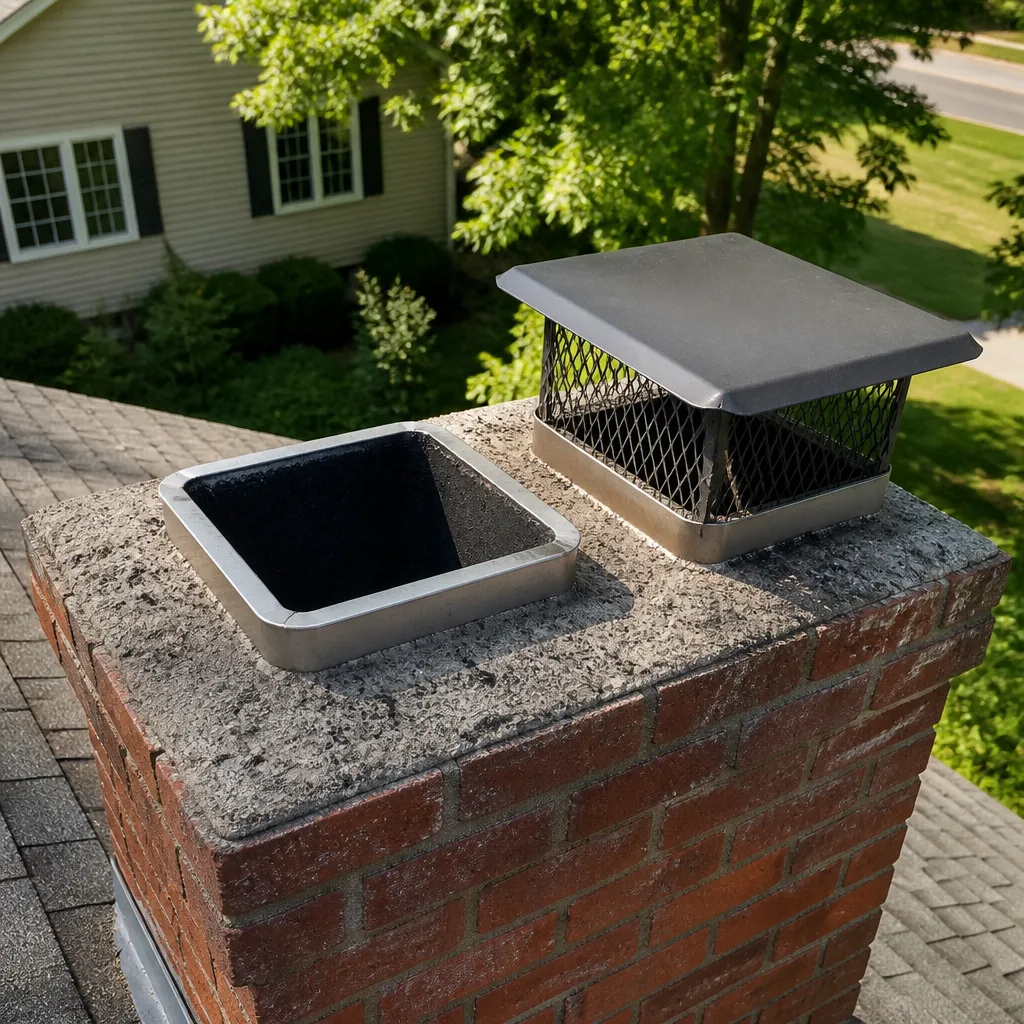
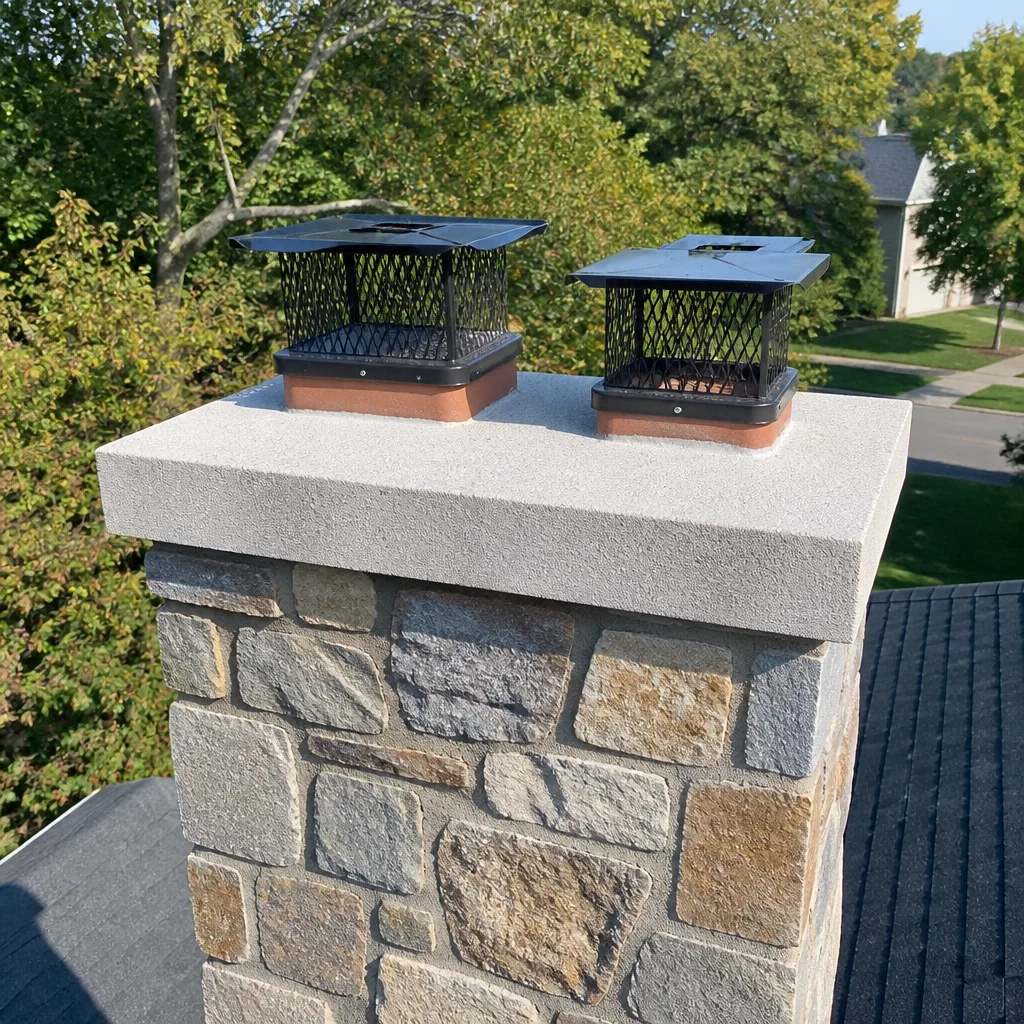
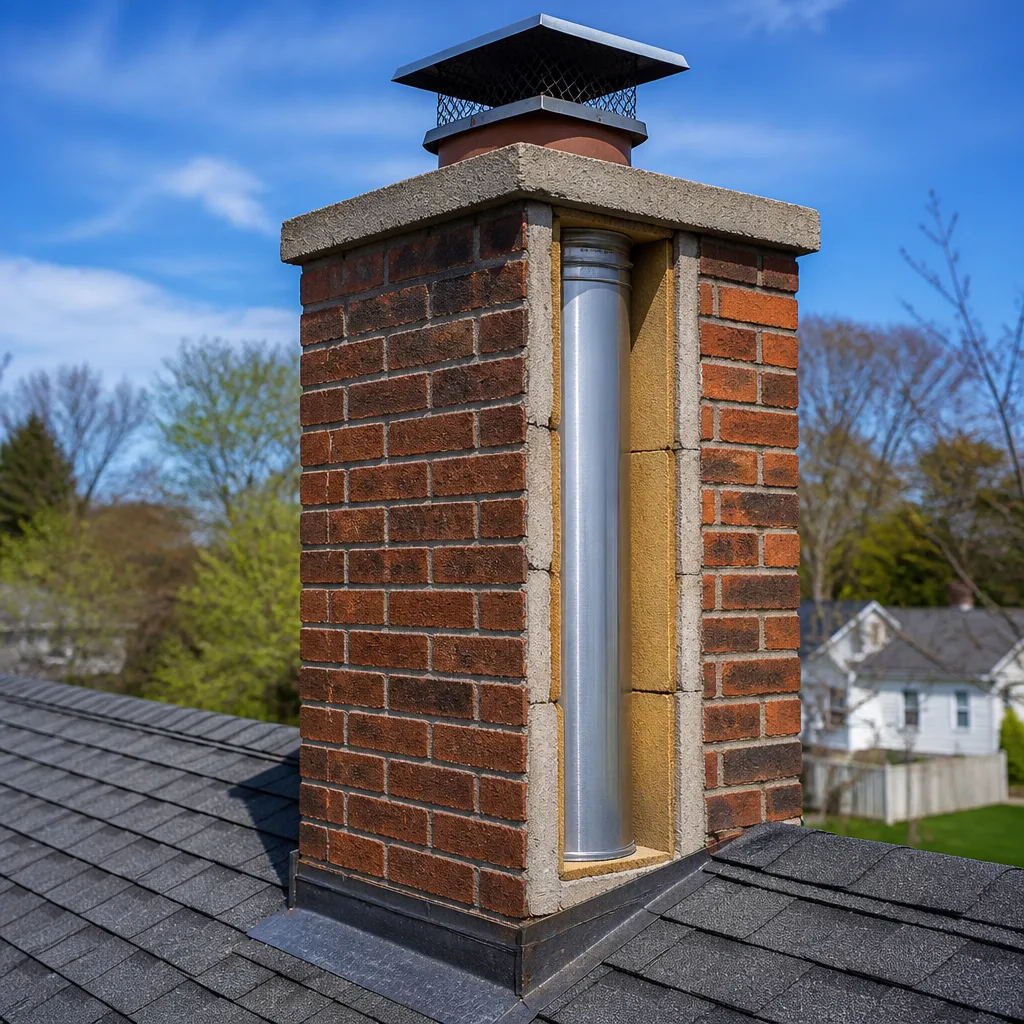
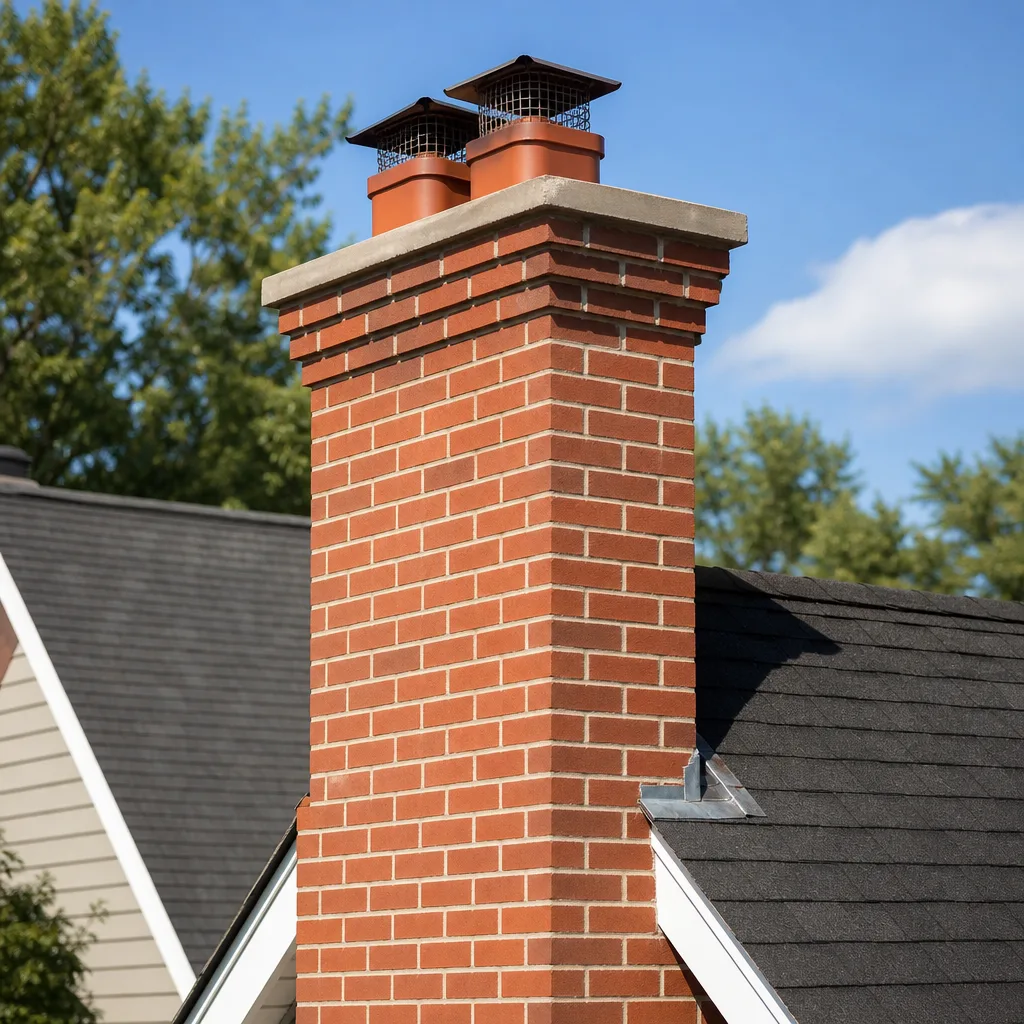
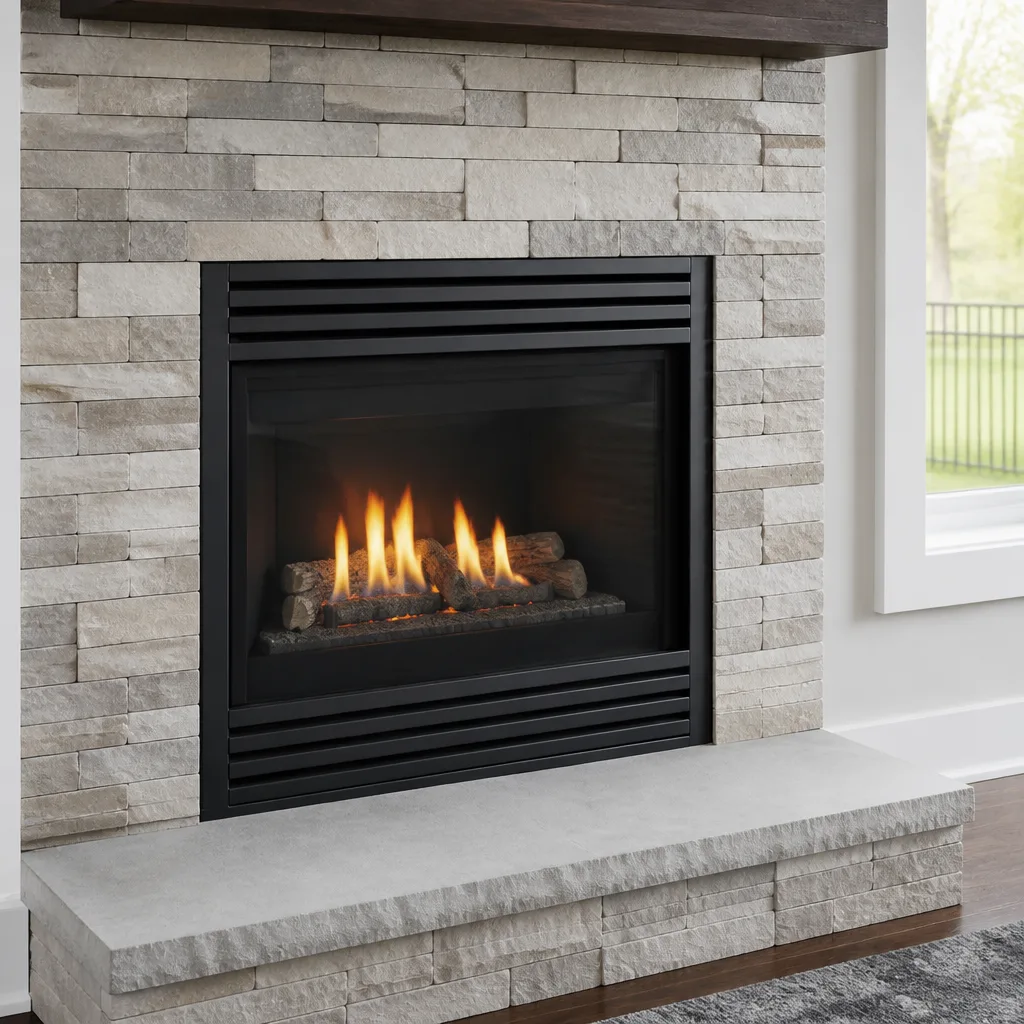
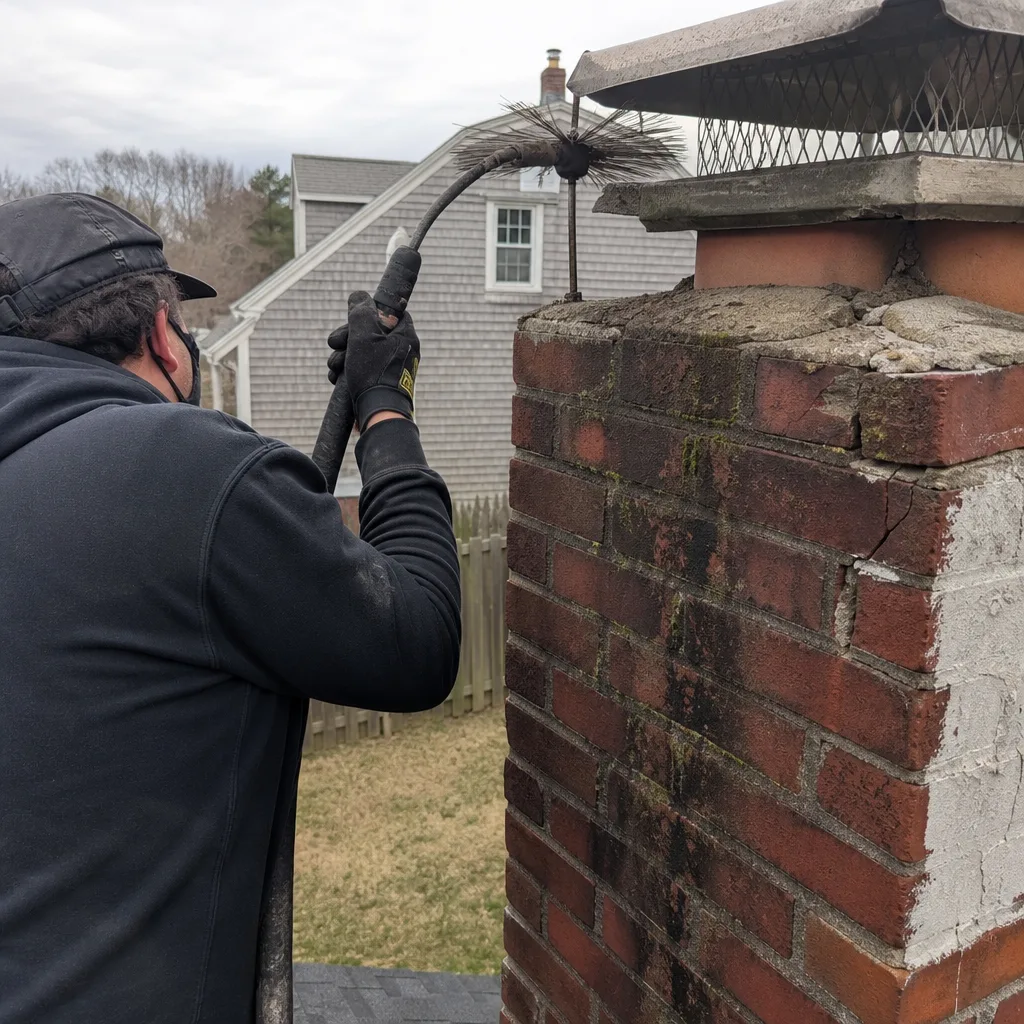 Before
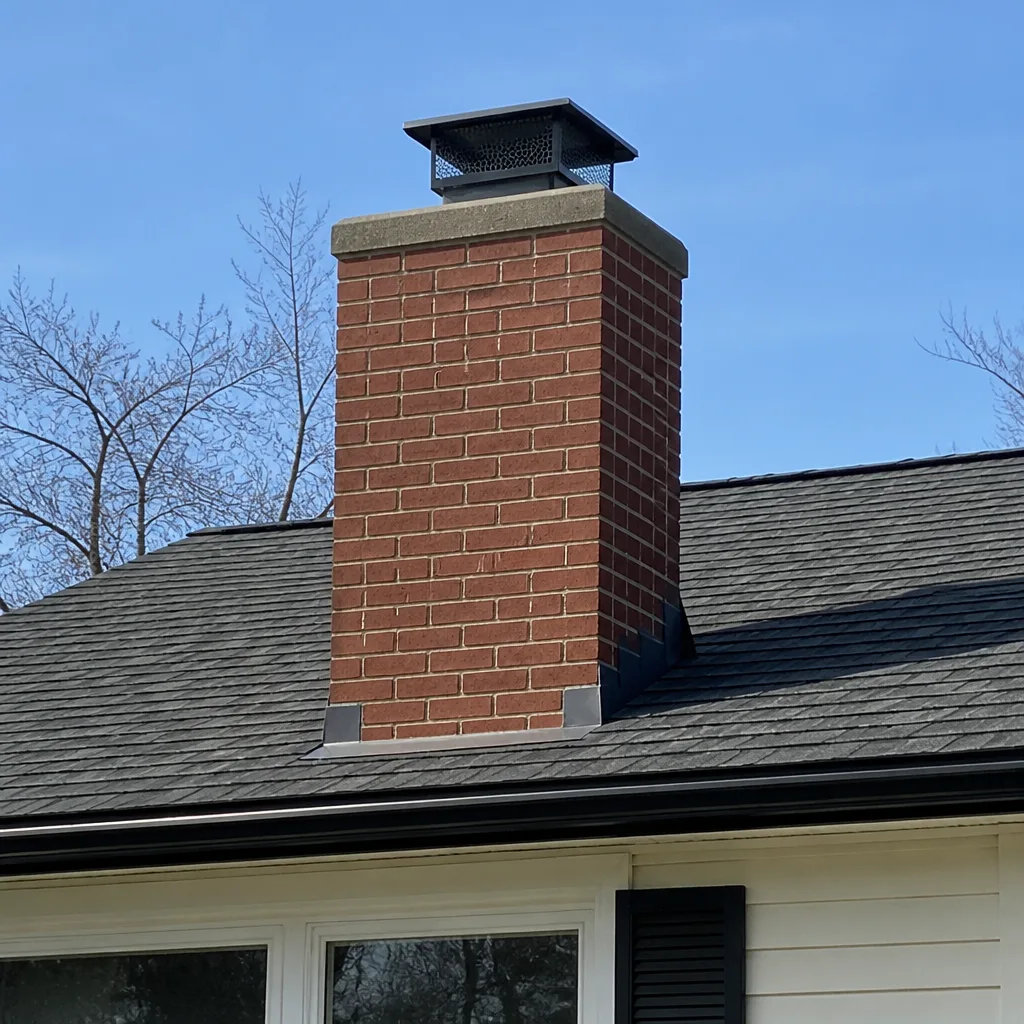 After
After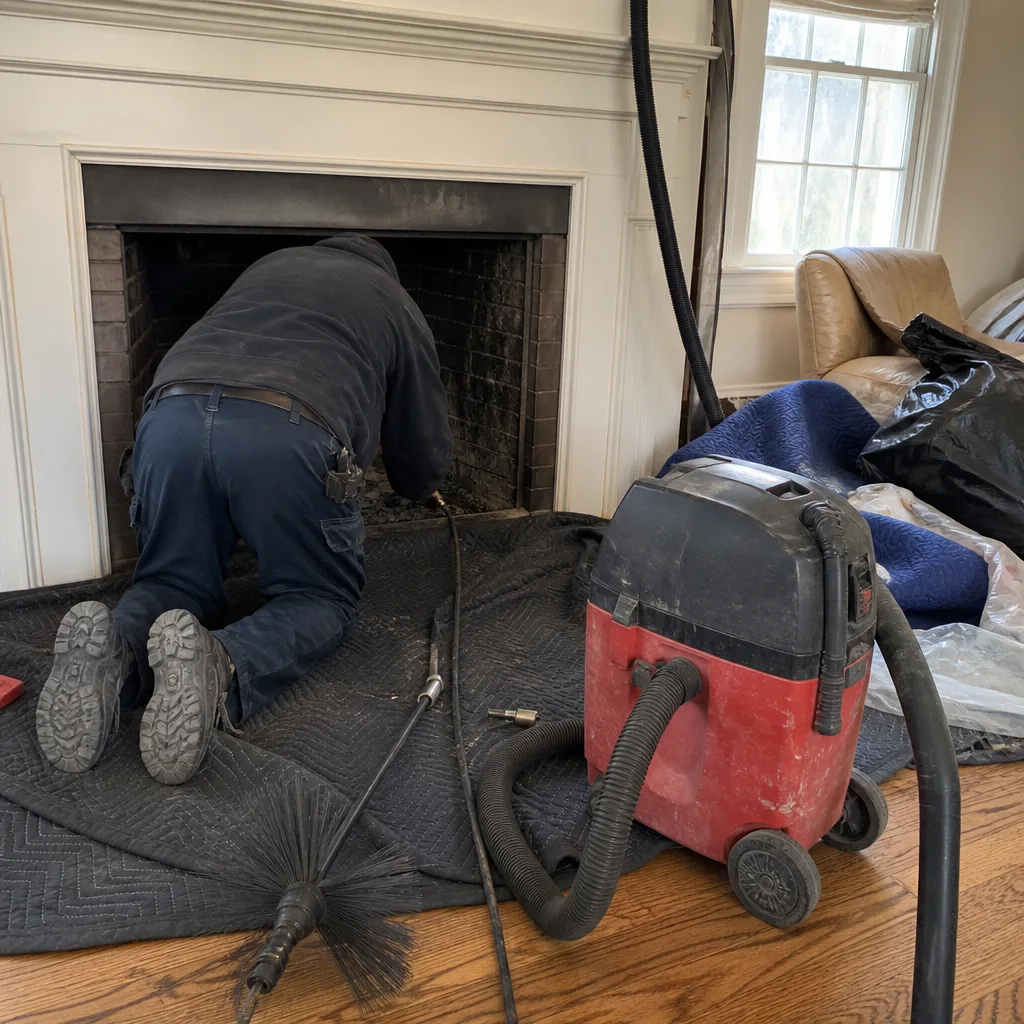 Before
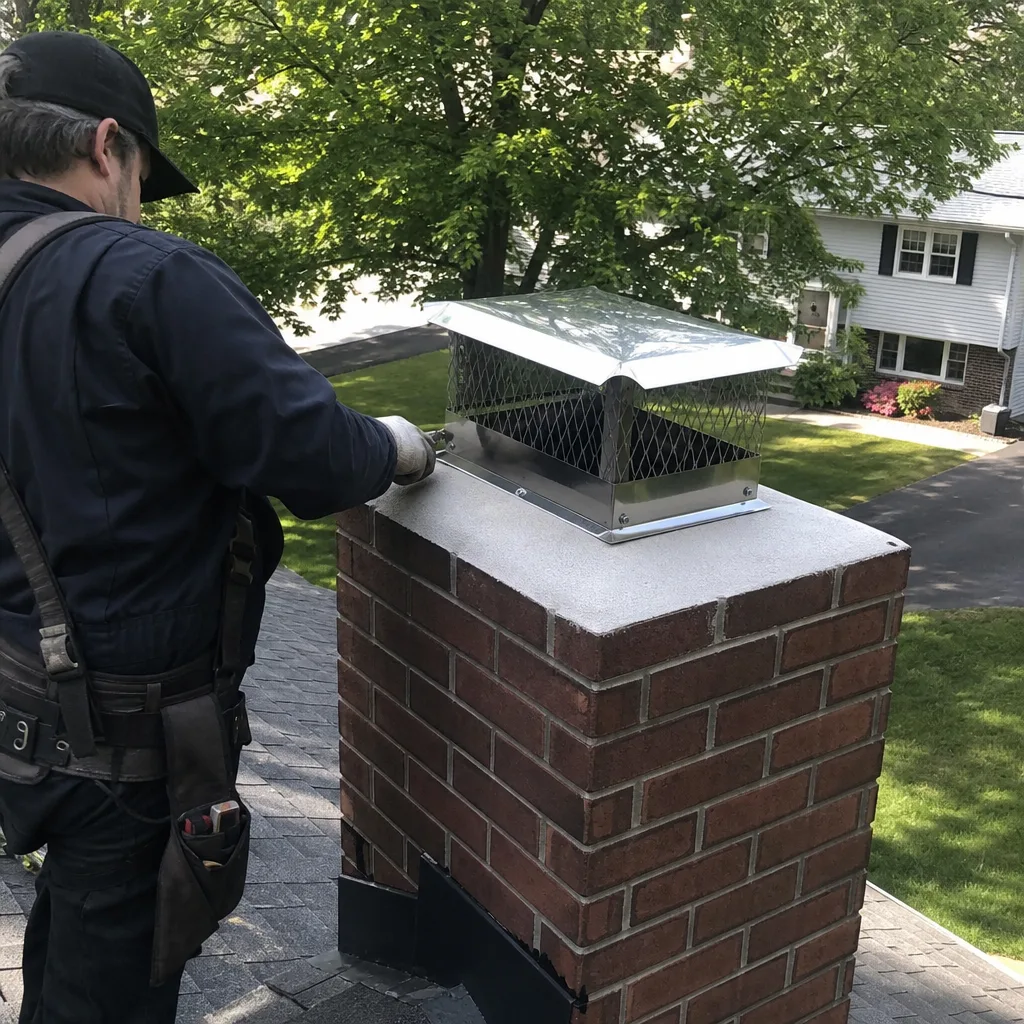 After
After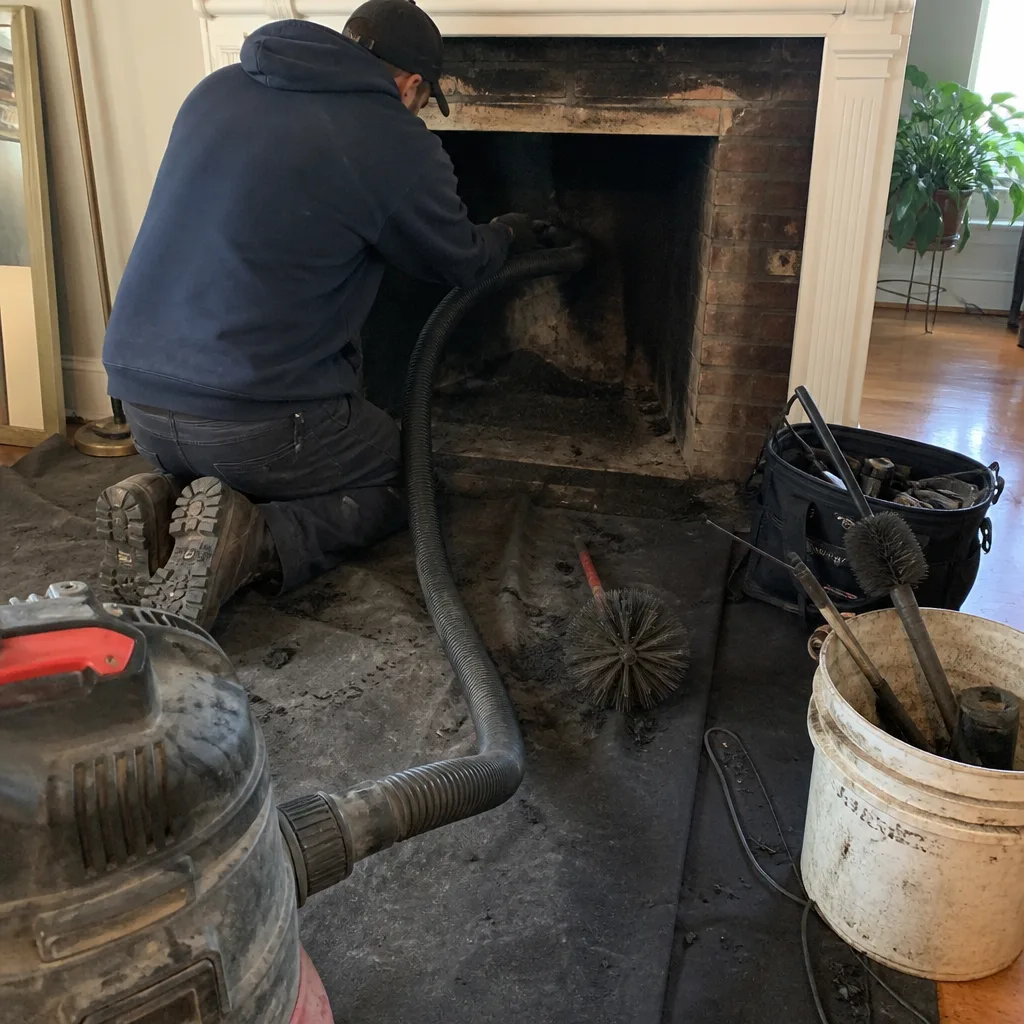 Before
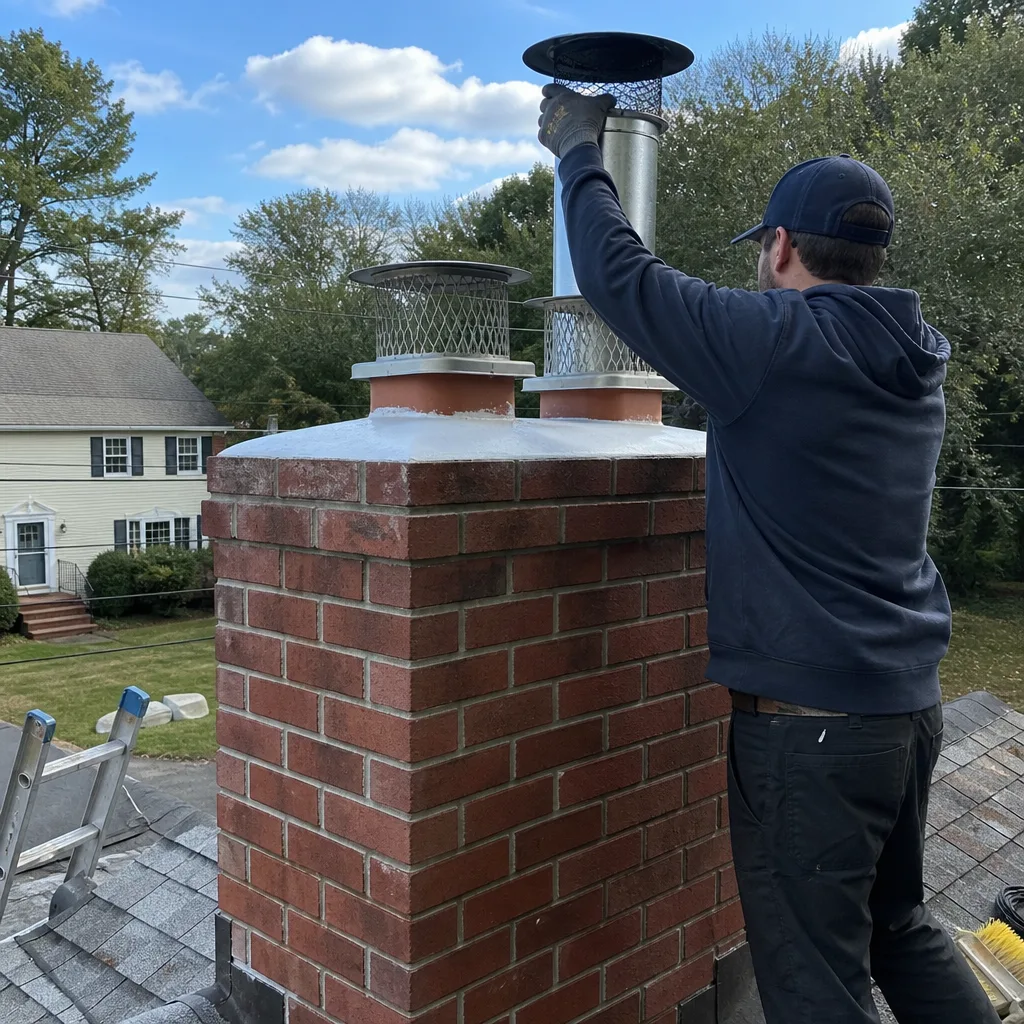 After
AfterChimney Cleaning Permits, Codes & Inspections in MA: What You Need to Know
Replacing a chimney liner in Massachusetts without a permit isn’t just a technicality. It can void your homeowner’s insurance claim if there’s ever a fire, and most contractors never explain that upfront. This guide covers what a basic chimney cleaning actually requires, what pushes a job into permit territory under Massachusetts 780 CMR, what Natick’s building department specifically wants to see, and how to keep your paperwork clean if you sell the house. For more detail, see our Complete Guide to Chimney Cleaning in Natick. We’ve been at this since 1999, and we’ve seen good homeowners get stuck with bad surprises. You won’t be one of them after this.
Quick Answer
A routine chimney sweep in Massachusetts does not require a permit. But if the cleaning turns up a cracked liner, a failed firebox, a rusted-through cap, or structural masonry damage, the repairs that follow often trigger a building permit and a Level 2 inspection. In Natick, the local building department enforces the Massachusetts State Building Code (780 CMR) and wants to see paperwork before and after any structural or liner work.
Table of Contents
- Does a Chimney Cleaning Itself Require a Permit in Massachusetts?
- What Work Actually Triggers a Permit Under 780 CMR
- How Natick’s Building Department Handles Chimney Work
- What a Level 2 Inspection Is and Why Your Insurance Company May Ask for One
- Previous Owner Skipped Permits: What You Do Now
- What Paperwork to Ask Your Sweep for Before You Sell
- What Permits and Inspections Cost in Natick and Middlesex County
- Common Mistakes to Avoid
- When to Call a Professional
- Frequently Asked Questions
Does a Chimney Cleaning Itself Require a Permit in Massachusetts?
No. A standard chimney sweeping, which removes creosote and soot from the flue with brushes and a vacuum, is considered routine maintenance. The Commonwealth of Massachusetts does not require a building permit for cleaning a flue, and neither does the town of Natick. You can schedule a sweep any day of the year, and the only paperwork you’ll see is the inspection report your sweep hands you when the job is done.
That said, a cleaning is rarely just a cleaning. The reason is simple: soot hides things. Wendell and his crew have swept thousands of chimneys across Natick, Wellesley, Framingham, and the surrounding towns, and a meaningful percentage of “simple cleanings” end with a camera pushed up the flue and a serious conversation about what the camera found. The cleaning itself doesn’t need a permit. What gets discovered during the cleaning very often does.
Here’s the practical takeaway: don’t assume that because you booked a cleaning, you’re avoiding the building department. You’re not in permit territory until the sweep finds something. And once a finding is on the table, pretending it isn’t there doesn’t make it go away. Homeowners insurance companies in Massachusetts have gotten much sharper about chimney-related claims since the 2010s, and an unpermitted liner replacement is exactly the kind of thing they look for after a house fire.
What Work Actually Triggers a Permit Under 780 CMR
Massachusetts 780 CMR is the State Building Code. It governs what requires a permit, how work gets inspected, and what documentation must exist when the job is finished. For chimneys, the rule is fairly simple: anything that changes the structure, the flue pathway, or the fire safety characteristics of the system requires a permit. Cosmetic and routine maintenance does not.
Here’s where the line falls in practice, based on what we’ve seen across Natick and Middlesex County:
- Chimney cleaning: No permit. Routine maintenance. Brush, vacuum, inspect, done.
- Chimney cap replacement: Usually no permit, but Natick inspectors want the cap installed to the manufacturer’s listing and properly fastened. A poorly fitted cap is a code issue even if the replacement itself isn’t a permit issue.
- Chimney crown repair or replacement: Repointing minor cracks is maintenance. Replacing the entire crown, which involves removing and reshaping the concrete top, crosses into permit territory in some Natick cases, especially if the flue tiles are disturbed.
- Stainless steel liner installation: Permit required. No exceptions. A new liner changes the flue’s dimensions, material, and clearance characteristics, and 780 CMR wants that on record. We use DuraFlex liners on most of our relining work in Natick.
- Flue tile repair or replacement: Permit required. This is structural work inside the chimney.
- Firebox rebuild: Permit required. The firebox is part of the fire safety assembly.
- Masonry rebuilding above the roofline: Permit required. If you’re taking down and rebuilding more than a few bricks, the town wants to inspect the footing and the structure.
- Wood stove installation: Permit required, along with a certificate of compliance from the manufacturer and a clearance inspection from the local fire department in many Massachusetts towns.
- Total chimney rebuild from the ground up: Permit required, obviously. Multiple inspections, including footings, mid-construction, and final sign-off.
The dividing line that surprises most Natick homeowners isn’t the liner or the firebox. It’s the crown. People think of a crown as a cosmetic slab of concrete on top of the brick. But the crown is a water-management component. When it fails, water gets behind the brick and freezes in the winter, which cracks the chimney from the inside out. Natick’s freeze-thaw cycle is brutal on crowns. Our advice: if a sweep tells you the crown needs full replacement, ask whether the town needs to be involved. The answer is often yes.
How Natick’s Building Department Handles Chimney Work
Natick’s building department operates out of the Edward J. Dlott Meeting Room building at 13 East Central Street. They enforce 780 CMR and the town’s local bylaws, which are not dramatically different from the state code but do add some local record-keeping requirements. For chimney work, the department wants three things: a permit application before the work begins, an inspection after key phases of the work are complete, and a final sign-off that goes into the property’s file at Town Hall.
What we’ve learned from filing dozens of chimney permits in Natick over the years:
- Apply before you start. The town’s permit portal allows online applications, but chimney permits often require a meeting or at least a phone call with the building inspector because the scope of work needs to be described correctly. If you don’t know whether your job needs a permit, call the building department and ask. They will tell you.
- Be specific about the materials. The town wants to know what liner you’re using, what brand, what gauge if applicable, and how it’s being insulated. “Stainless steel liner” isn’t enough. “6-inch DuraFlex 316Ti liner with insulation wrap” is. Homes in Natick’s older neighborhoods, like the ones near downtown and around Lake Cochituate, often have chimneys with non-standard flue dimensions, so the town wants to see that the liner actually fits the flue.
- Have the inspection done when the work is visible. The most common mistake we see is a homeowner who lets the contractor finish the top cap and parge the crown before the inspector sees the liner connections. Once that work is buried, the inspector can’t verify the installation. That means opening it back up, which means money.
- Keep the paper. When the job is signed off, the town updates the property file. But if you don’t keep your own copy of the permit and the final inspection certificate, you’ll be scrambling later when you sell or when your insurance company asks for proof. We’ll talk more about this in the documentation section below.
- Natick’s inspectors are not interchangeable with other towns. What passes in Framingham or Wellesley may not pass in Natick, and vice versa. Local building departments have local inspectors with local judgment. Don’t assume a contractor’s experience in another town means they know what Natick’s inspector wants to see. Ask them directly: “Have you pulled chimney permits in Natick specifically?”
What a Level 2 Inspection Is and Why Your Insurance Company May Ask for One
A Level 2 inspection is a camera inspection of the entire flue, from the firebox to the top of the cap, along with an assessment of the chimney’s exterior condition. It’s more thorough than a Level 1 inspection, which is what you get during a routine cleaning. Level 1 is visual: the sweep looks at the accessible parts of the chimney and the flue interior with a flashlight. Level 2 involves running a camera the full length of the flue and documenting what it sees with photos or video.
In Massachusetts, a Level 2 inspection is typically required in three situations:
- After any significant repair. If you’ve had a liner installed, a firebox rebuilt, or masonry work done, the town wants a Level 2 inspection to verify the repair restored the system to code. This is often folded into the final building department inspection.
- When a property changes hands. Many home inspectors in the Natick area will flag a chimney that hasn’t been camera-inspected and recommend a Level 2 as part of the purchase process. Buyers in towns like Natick, where the housing stock includes a lot of 1920s Colonials and 1950s ranches, are increasingly asking for this before closing.
- After a chimney fire or a lightning strike. If there’s any event that could have compromised the flue, your insurance company will almost certainly ask for a Level 2 inspection before they’ll process a claim or renew a policy.
Here’s the important part for Natick homeowners: your insurance company may ask for a Level 2 inspection even if the building department doesn’t. Insurance underwriters in Massachusetts have been tightening their chimney requirements for years. If your house has a wood-burning fireplace or a wood stove, your insurer may require a Level 2 inspection as a condition of the policy, or after a claim, or at renewal. We’ve had customers tell us their insurer asked for dated camera footage showing a clean, intact flue before they’d bind the policy. We run a camera on every chimney we inspect in Natick, and we provide the footage along with a plain-English written report. Your insurance company gets what they need; you get to see exactly what we see.
Previous Owner Skipped Permits: What You Do Now
This happens more than anyone likes to admit. You buy a house in Natick, you settle in, and then you go to make a chimney repair or file an insurance claim, and you discover the previous owner had the chimney rebuilt or the liner installed without a permit. Now the work exists, but there’s no record of it. What do you actually do?
First, don’t panic. This is solvable. The process in Massachusetts, and in Natick specifically, usually goes like this:
- Get the current condition documented. Before you do anything else, have a Level 2 camera inspection done. This establishes what’s actually there and whether the work was done even close to code. You need facts before you talk to the town.
- Check the town’s property file. Call Natick’s building department and ask to see the permit history on your address. There’s a good chance the work was permitted and the paperwork just didn’t make it into the seller’s hands. If the permits are there, you’re done. Pull copies and put them in your own file.
- If there’s no permit, be honest with the town. You can’t fix a problem by hiding it. Natick’s building inspectors deal with this regularly. They may require you to apply for a retroactive permit, which typically means having the work inspected and brought up to current code. In some cases, they’ll accept the work as-is if the inspection shows it’s sound.
- Factor in the cost of bringing the work to code. If the previous owner’s contractor cut corners, the retroactive inspection may find problems. A poorly fitted liner, missing insulation, an undersized flue, or improper clearances to combustibles. Those must be fixed before the town signs off.
- Keep every piece of paper. Once the town signs off on the retroactive permit, that paperwork is gold. It proves the chimney is code-compliant, which matters for your insurance policy and for the next sale of the house.
We’ve walked Natick homeowners through this exact process. It’s bureaucratic, but it’s not a nightmare if you handle it directly. And here’s the thing: if the previous owner used a contractor who didn’t pull permits, that contractor has left the state by now. You can’t chase them. The only way out is through the building department, and the town is more reasonable than most people expect when you show up in good faith.
What Paperwork to Ask Your Sweep for Before You Sell
If you’re planning to sell your Natick home, here’s the cold truth: the buyer’s home inspector will flag the chimney, and the buyer’s insurance company will want to know what’s been done to it. If you can’t produce documentation, the deal can stall, or the buyer can ask for a credit, or the insurance company can decline to bind the policy. None of those outcomes are good for you.
Here’s what to ask your sweep for after any chimney work, and what to keep in a folder:
- The inspection report. Every cleaning and inspection should end with a written document that describes what was done, what was found, and what condition the flue is in. Not a verbal summary. Written.
- Camera footage. Ask for the video or still images from the Level 2 inspection. This is the strongest evidence you have that the flue was clean and intact on a specific date.
- The permit and final inspection certificate. If any work was permitted, make sure you have both the permit itself and the town’s final sign-off. The permit alone doesn’t prove the work passed inspection.
- Material specifications. If a liner was installed, keep the brand, the model, the gauge, and the insulation spec. We install DuraFlex liners on most Natick jobs, and we provide the material details on every invoice. “Stainless steel liner” is not enough for a sale. “DuraFlex 316Ti, 6-inch, with 1/2-inch insulation wrap” is.
- Dates and a maintenance log. Buyers like to see that the chimney has been cleaned regularly. If you’ve had annual cleanings, keep a simple log: date, what was done, who did it. It reads as responsible ownership.
- The 90-Day Done Right Promise. Every job we do at Top Hat Chimney is backed in writing. If the work isn’t right, one call brings Wendell back at no additional cost. That kind of paperwork matters to a buyer and to a buyer’s agent.
When you sell, hand all of this to your real estate agent before the inspection contingency period starts. It eliminates uncertainty and prevents the other side from using the chimney as a negotiation lever. We’ve seen it work in Natick. The seller who has a folder full of chimney paperwork is the seller who doesn’t lose $5,000 at the closing table over a fireplace the buyer was going to use twice a year anyway.
What Permits and Inspections Cost in Natick and Middlesex County
Permit fees in Natick are based on the cost of the work, and they’re not a secret. The town publishes a fee schedule, and for most chimney work, the building permit fee runs in the range of $50 to $150 for a straightforward liner replacement or firebox repair. For a full chimney rebuild, the fee scales with the project cost and can land in the $200 to $400 range. The inspection itself is covered by the permit fee, though there may be additional charges for re-inspections if the work fails the first time.
Here’s the structure for a typical liner replacement in Natick:
- Building permit fee: $50 to $150 depending on declared project cost
- Level 2 camera inspection: $150 to $350, depending on the company and whether it’s bundled with other work
- Retroactive permit (if applicable): Same as the ordinary permit fee, plus the cost of any re-inspections or code corrections
- Final inspection sign-off: Covered by the permit, no additional charge the first time
Compare that to what it costs when a permit is skipped. An unpermitted liner that’s discovered during a sale can trigger a price reduction of $2,000 to $5,000. An unpermitted liner after a fire can give an insurance company grounds to deny a claim entirely. The permit is the cheapest insurance you’ll ever buy against a chimney problem.
Common Mistakes to Avoid
- Assuming a cleaning requires a permit. It doesn’t. But assuming the conversation ends there is a mistake. The cleaning is the discovery phase, and what gets discovered is what drives the rest of the process.
- Letting a contractor replace a liner without a permit. This is the big one. An unpermitted liner is a fire the insurance company gets to walk away from. In Natick, there’s no reason to skip the permit. The fee is trivial compared to the risk.
- Not camera-inspecting after a chimney fire. A chimney fire can crack the flue liner even if it burned itself out quickly. If you don’t run a camera, you’re burning with a breach you can’t see.
- Confusing Natick’s rules with another town’s. Massachusetts is a 351-town state, and every local building department has its own interpretations. What slides in one town doesn’t slide in Natick. Ask your contractor whether they’ve pulled permits in Natick specifically.
- Throwing away paperwork. The permit, the final sign-off, the camera footage, the invoice. All of it. Twenty years from now, when you sell the house, that folder is worth real money.
- Assuming the home inspector will catch the chimney. General home inspectors are not chimney specialists. They look at the visible exterior and maybe the firebox. They don’t run a camera up the flue. A clean home inspection report doesn’t mean the chimney is sound.
- Waiting until October to think about the chimney. In Natick, the building department is busiest from September through December, and chimney sweeps are booked out for weeks. Once a year, burn or no burn. Chimneys break in the off-season too.
When to Call a Professional
If you haven’t had the chimney cleaned in two or more years, call a sweep. If you’ve had a chimney fire, call a sweep. If you see crumbling mortar in the firebox, water stains on the ceiling near the chimney, white staining on the brick exterior, or rust on the cap, call a sweep. If you’re buying or selling a home in Natick and the chimney has any history at all, call a sweep. The camera doesn’t lie, and the earlier you catch a problem, the smaller the repair. Top Hat Chimney offers free estimates in Natick and the surrounding communities. Call (781) 378-5846. Wendell will answer, or someone who works for him will, and you’ll get a straight answer about what you actually need to do.
Frequently Asked Questions
A standard chimney cleaning in Natick typically runs $180 to $300 for a single-flue fireplace, with wood stove cleanings landing in the same range. Add a Level 2 camera inspection and the total is usually $300 to $450. Call (781) 378-5846 for an exact quote. Estimates are free, and the number you hear on the phone is the number on the invoice.
Yes. Stainless steel liner installation is a code-governed repair under 780 CMR, and Natick’s building department requires a permit before the work begins and a final inspection after it’s done. Any contractor who says otherwise is telling you a story that ends badly. We install DuraFlex liners in Natick and handle the permit and inspection paperwork on every liner job.
Once a year, burn or no burn. Massachusetts winters push fires hard from October through March, but chimneys also break during the summer off-season when moisture works its way into the masonry. An annual sweep keeps the creosote load down and gets a camera on the flue before small problems become big ones.
Creosote builds up in layers. First-degree creosote is a brush job. Third-degree is a glaze. Catch it early. If you skip a few years of cleanings in Natick, where the fires burn long and hot, the creosote can build to a point where it feeds a chimney fire. And a chimney fire can crack the flue, and a cracked flue can leak heat into the framing. That’s the path to a house fire, and it’s the path your insurance company scrutinizes hardest.
Increasingly, yes. Many Massachusetts insurers now require a dated Level 2 camera inspection before they’ll bind a new policy on a house with a wood-burning fireplace or wood stove, and after any claim or chimney event, the request is nearly automatic. If you have camera footage and a written report on file, you’re ahead of the game. If you don’t, you’re playing catch-up at the worst possible time. Call (781) 378-5846 to schedule an inspection, and we’ll provide the footage and the report in a format your insurer will accept.
Usually not, but the cap still has to meet code. Natick’s building inspectors want caps made from approved materials, properly sized for the flue, and mechanically fastened. A loose-fitting cap that shifts in the wind or loses its screen is a code problem even if it isn’t a permit problem. We stock and install Olympia Chimney and Copperfield caps in Natick, and every one goes on the right way the first time.
The Bottom Line
A chimney cleaning in Massachusetts doesn’t need a permit. But the repairs that a cleaning uncovers often do, and the difference between permitted work and unpermitted work is the difference between a house you can sell and a claim your insurer can deny. Natick’s building department enforces 780 CMR with real inspectors who want real paperwork, and the permit fees are trivial compared to the cost of skipping them. Get the camera inspection. Keep the paper. Ask your sweep whether they know Natick, specifically. If you need someone who does, call (781) 378-5846, or browse more guides & resources. Wendell has been at this since 1999, and the name on the work is the name you’ll see again on Saturday.
Written by Wendell Pike, Owner at Top Hat Chimney, serving Natick since 1999.
Related services: Top Hat Chimney home · Chimney Cleaning & Sweep in Natick · Chimney Repair in Natick · Fireplace Services in Natick