
Last updated September 10, 2026
Level 1 sweep and inspection to the NFPA 211 annual standard - flue, crown, cap, and flashing checked and photographed
Chimney sweep logs do not sweep chimneys. They loosen some creosote - which then falls where a brush and vacuum still have to collect it.
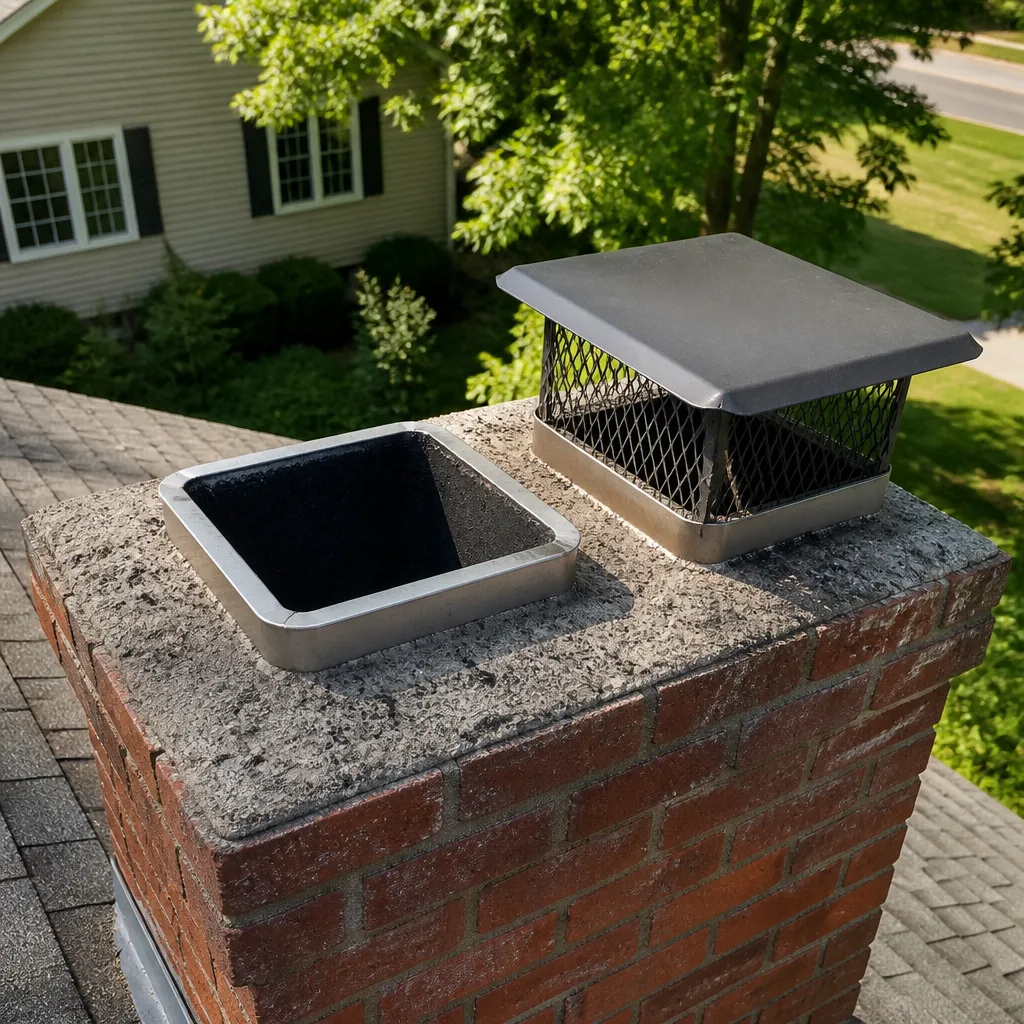
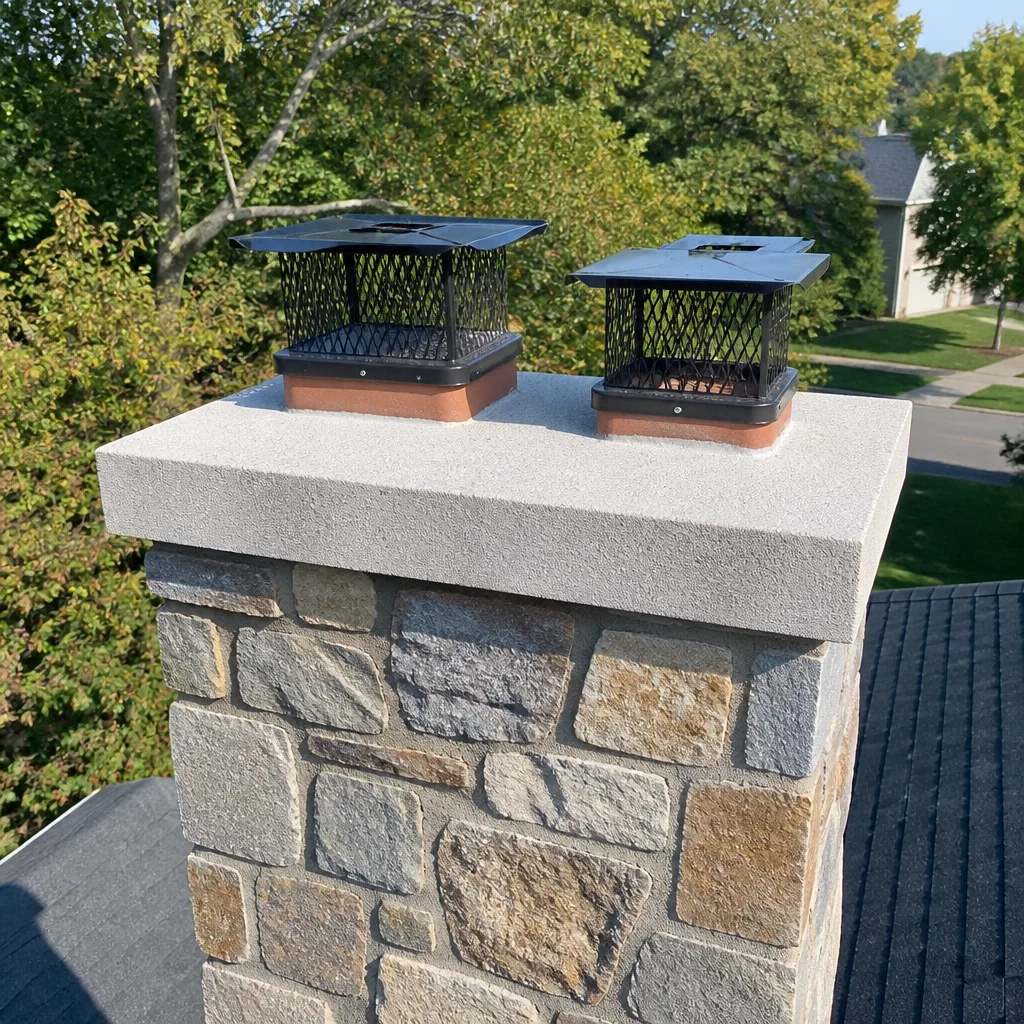
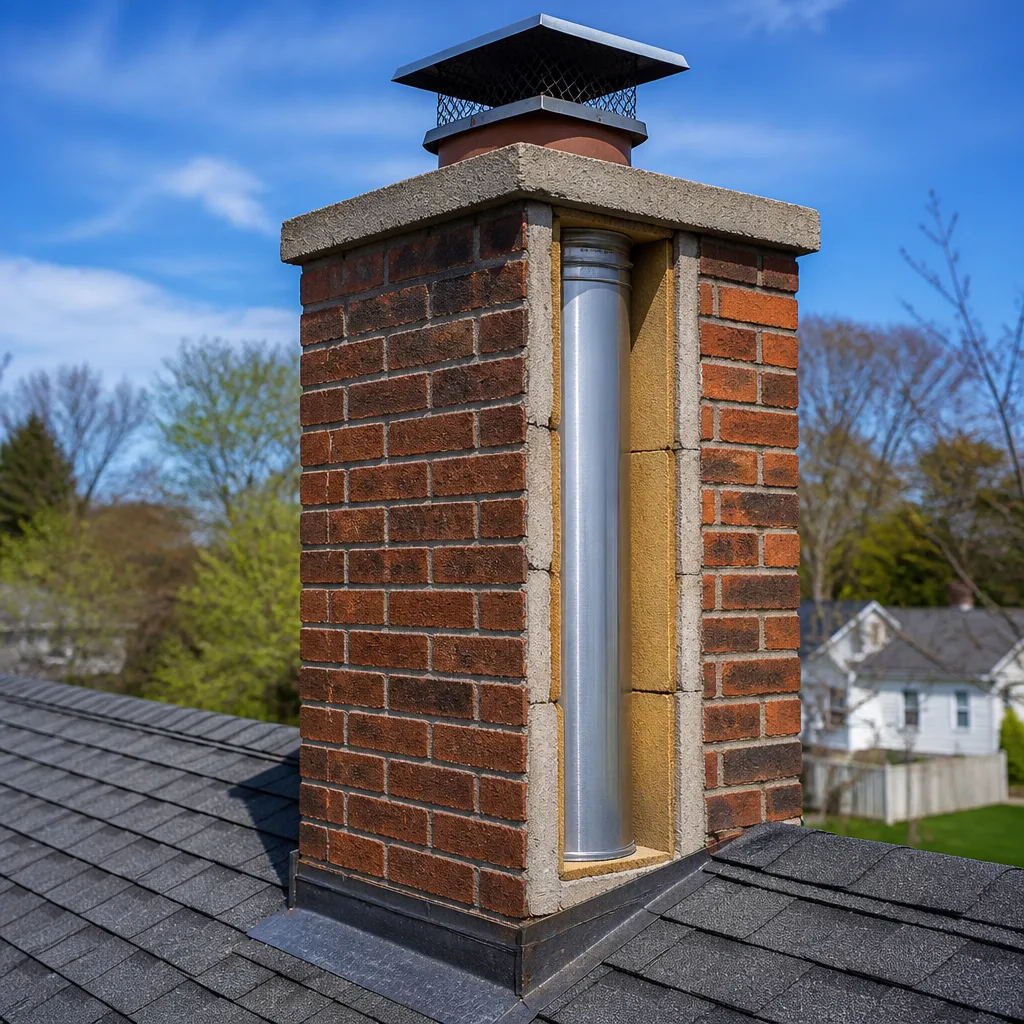
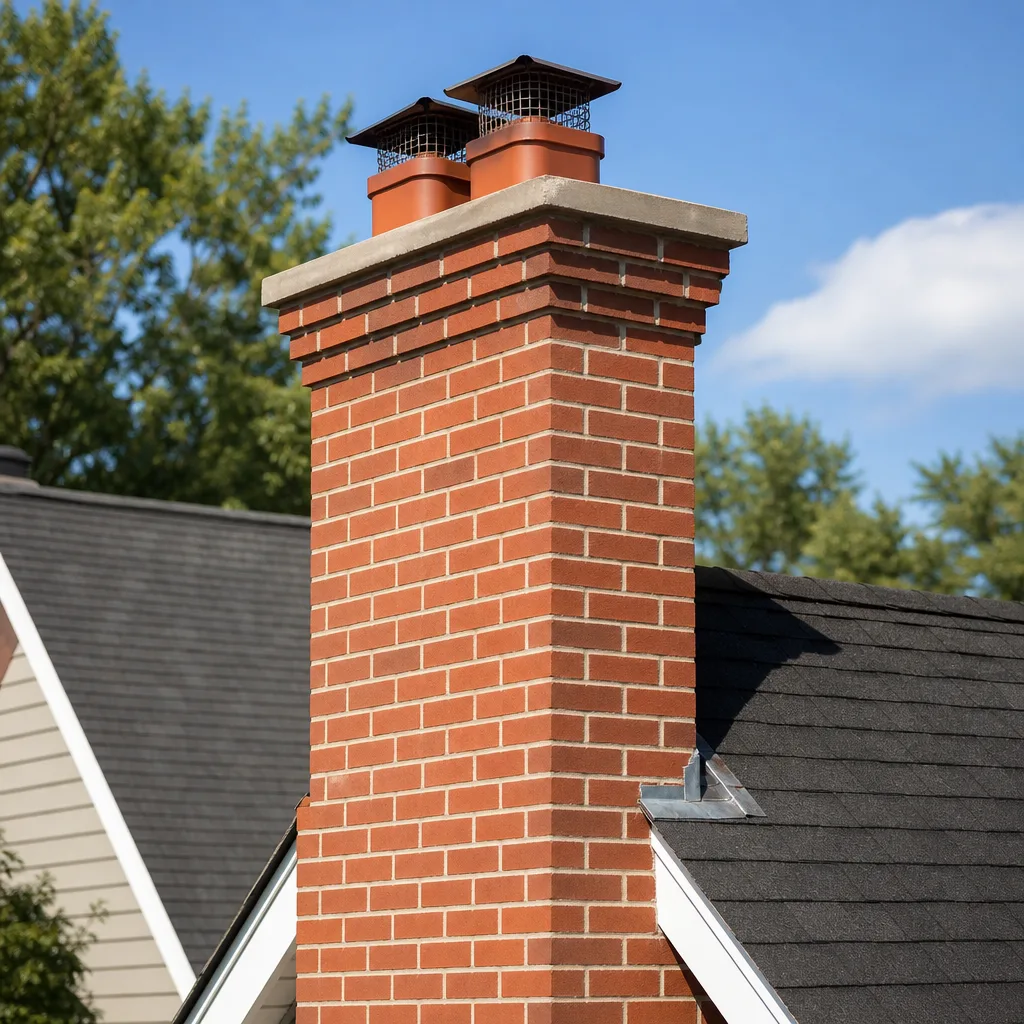
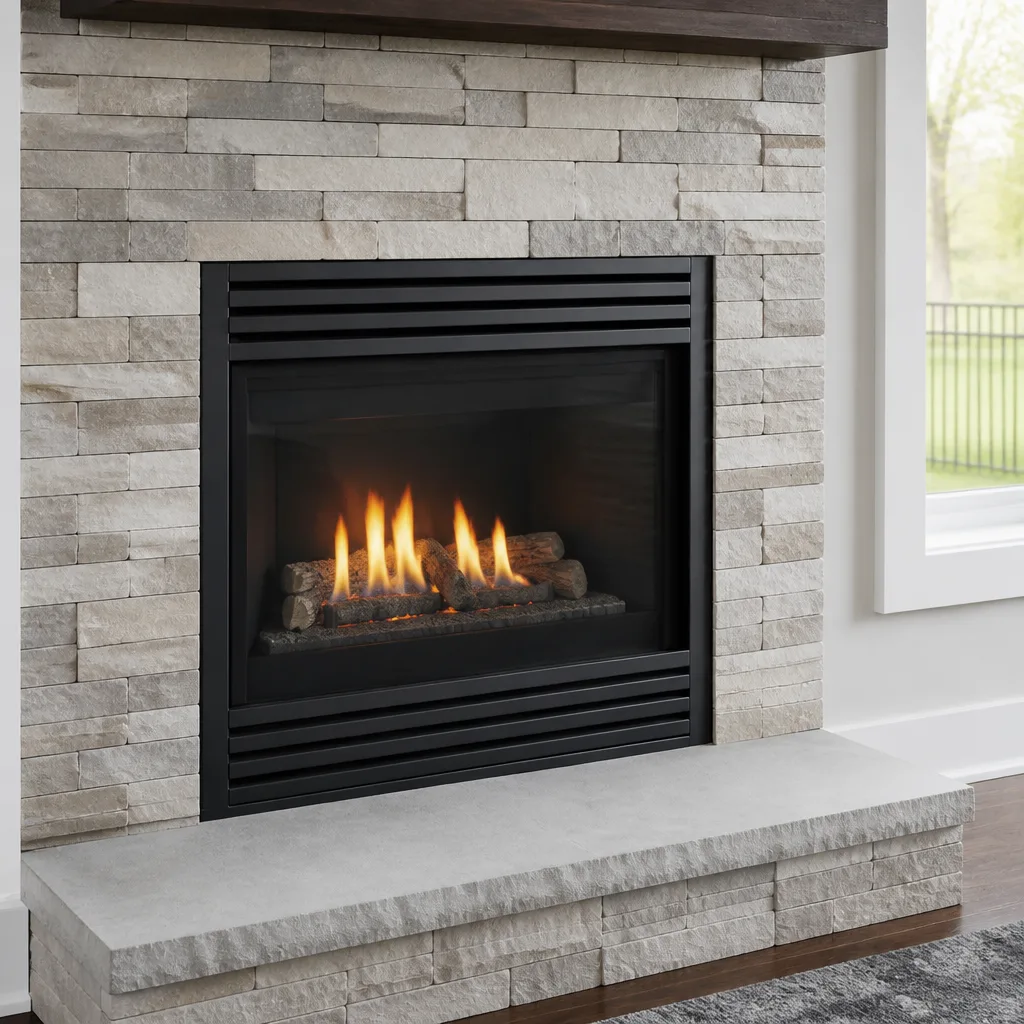
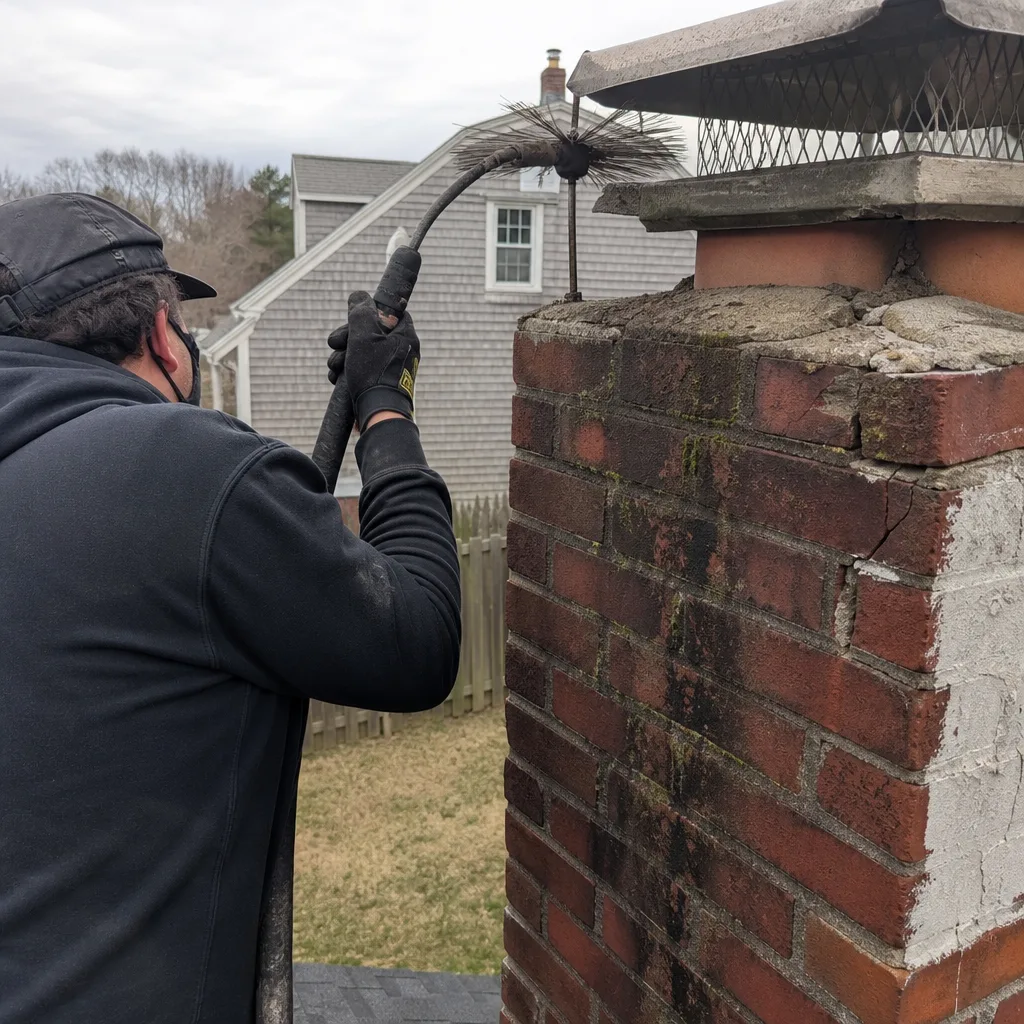 Before
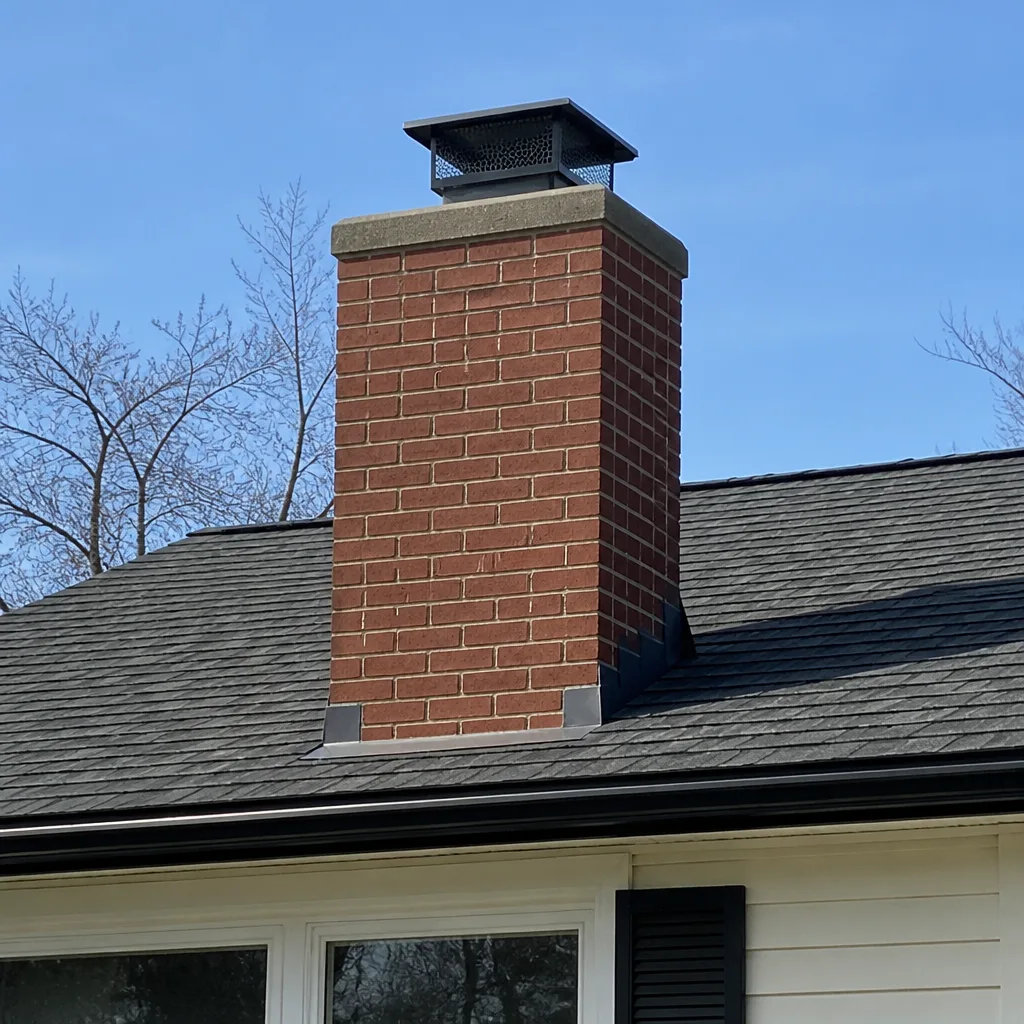 After
After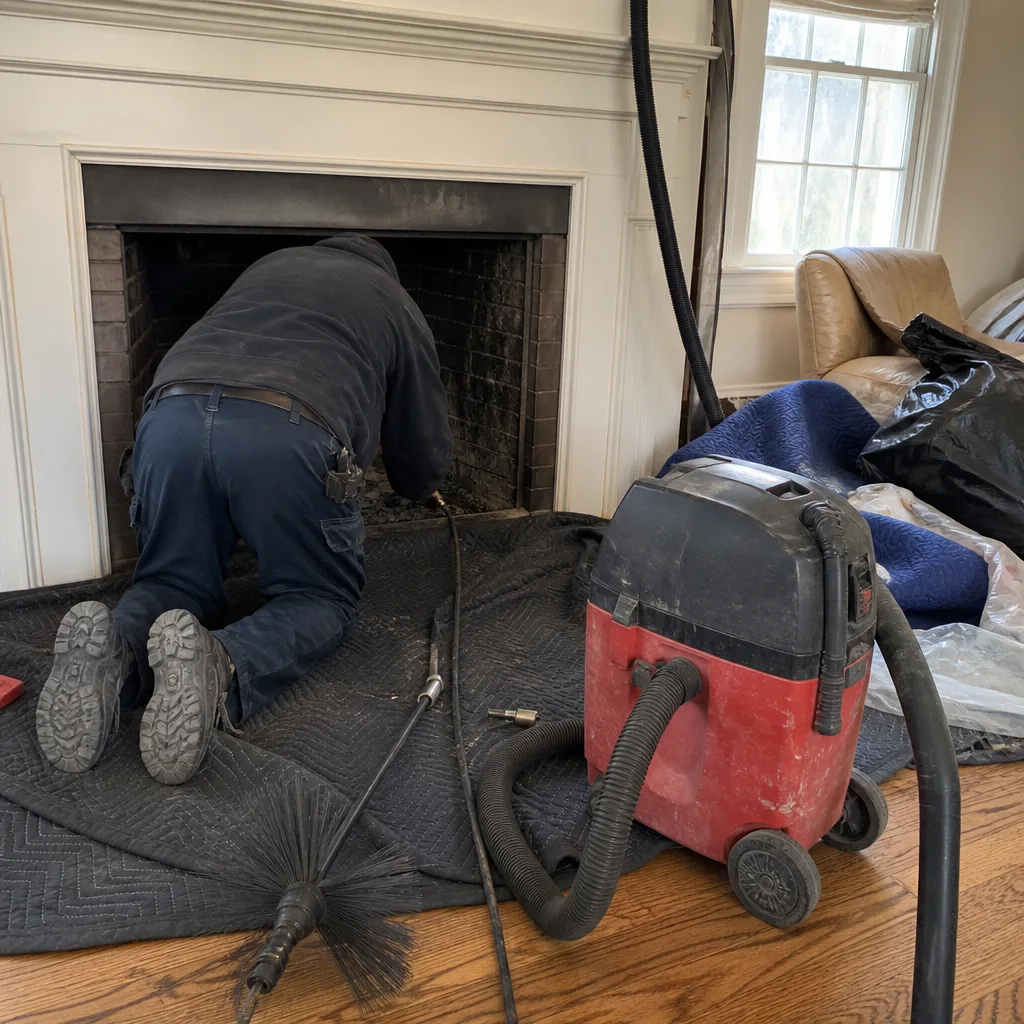 Before
 After
After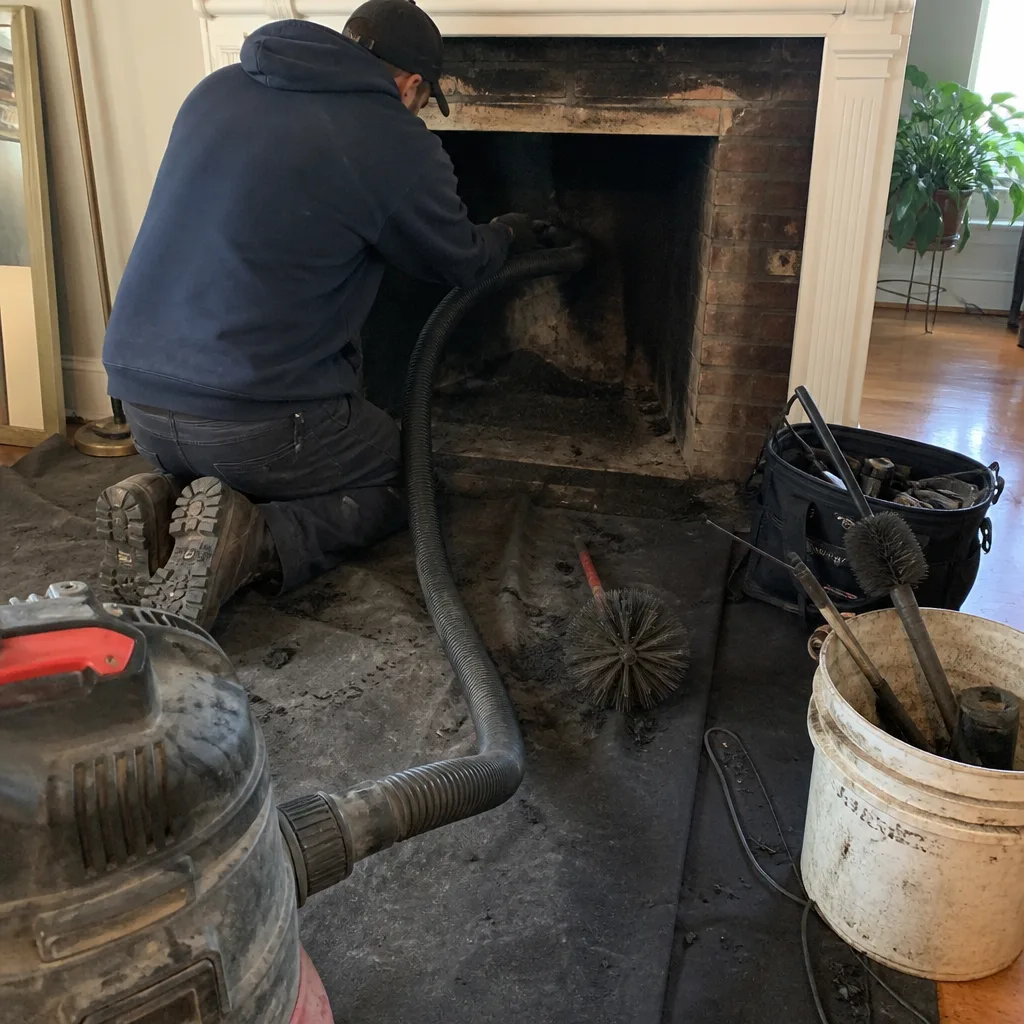 Before
 After
AfterThe Complete Guide to Chimney Cleaning in Natick
Natick has more pre-1960 masonry chimneys per square mile than most people realize. That matters because older clay-tile liners crack in ways that never show on the outside of the chimney, and the creosote those old flues collect burns differently than what you’d find in a newer house. This guide covers what actually happens inside a Natick chimney, what a proper cleaning should include, what it should cost, and how to know whether the person charging you actually did the work. For more guides & resources, see our full blog. If you own a home in Natick with a wood-burning fireplace or a boiler venting through a chimney, the details here apply to you specifically.
Quick Answer
A chimney cleaning in Natick typically costs between $180 and $340 for a standard sweep of one flue, depending on creosote level and liner access. Most single-flue cleanings take 45 to 90 minutes when done properly. Your flue does not care how the fire looks. It cares how it breathes, and once a year, burn or no burn, is the right interval for a Natick home.
Table of Contents
- Why Natick Chimneys Build Creosote Differently
- What a Proper Cleaning Visit Looks Like, Start to Finish
- Level 1 vs Level 2 Inspection: Which One You Need After a Natick Winter
- Oil-to-Gas Conversion and What It Means for Your Liner
- How Much Chimney Cleaning Costs in Natick
- Red Flags the Company You Hired Is Not Doing the Job
- When to Sweep and How Often in Natick
- Common Mistakes to Avoid
- When to Call a Professional
- Frequently Asked Questions
Why Natick Chimneys Build Creosote Differently
Creosote is creosote the way a snowstorm is a snowstorm: the broad strokes are the same, but the details depend on where you live and what you burn. In Natick, three local factors change how much creosote builds up, how fast it does so, and what kind you get.
First, the housing stock. A large share of Natick homes are colonials and capes built between 1920 and 1970. Those houses were framed around masonry chimneys with rectangular clay-tile flue liners, often sized for the original oil-burning furnace rather than a modern glass-door fireplace. When a homeowner later installs an EPA-rated wood stove or a high-efficiency insert, the flue is suddenly oversized for the appliance. The smoke moves slower up that wide flue, cools sooner, and drops more creosote on the tile walls. Newer homes in Natick built after 1990 generally have correctly sized round liners for the fireplace they came with, and they do not accumulate creosote at the same rate.
Second, the weather. Natick winters run long and damp between cold snaps. That moisture cycle pushes homeowners to burn fires more often, sometimes with wood that has not finished seasoning. Partially dry wood produces a cooler, wetter smoke, and wet smoke is a creosote factory. The temperature swings also stress clay tiles through repeated expansion and contraction, and hairline cracks become places where creosote can lodge and collect where a brush cannot easily reach.
Third, the species of wood. Much of the firewood sold around Natick is a mix of oak, maple, and occasional white birch. Oak is excellent when dry. Maple runs medium. Birch burns hot but fast and produces a heavy, oily smoke when even slightly green. The oilier the smoke, the closer you get to third-degree creosote, the glaze kind that does not come off with a standard brush.
We have seen the same basic pattern since 1999: a pre-1960 colonial in Natick with a fireplace that is used two or three nights a week from November through March needs more attention than the same routine would suggest in a newer house. The rule of thumb stays the same, once a year, but the consequences of skipping a year are heavier here than in a town full of newer construction.
What a Proper Cleaning Visit Looks Like, Start to Finish
You should know what you are paying for before you ever write the check. Here is what a proper chimney cleaning in Natick looks like from the moment the sweep arrives to the moment the truck pulls away.
- Drop cloths and dust control go down first. The work area in front of the fireplace gets covered, and a high-suction vacuum rated for fine dust runs during the entire cleaning. If the company shows up without a vacuum or tells you a little dust is normal, that is your signal to watch closely.
- The flue is inspected by eye and, increasingly, by camera before any brush touches it. The sweep should look up the flue with a light, note the type and condition of the liner, and check for obstructions like a bird nest, dead squirrel, or fallen tile. At Top Hat Chimney, Wendell runs a camera up the flue on cleaning visits where the condition of the liner is in question, and you get to see the footage yourself.
- The brush is sized to the flue, not whatever happens to be on the truck. A 13 x 13 clay flue takes a different brush than a 6-inch round stainless liner. Using the wrong size leaves ridges of creosote along the corners and edges, which means you paid for half a job.
- The sweep runs the brush the full length of the flue, from the firebox or roof all the way to the termination. On a tile-lined masonry chimney, that usually means getting on the roof and going in from the top. On a stainless liner serving a wood stove, the cleaning can often be done from the appliance, but either way the full flue gets brushed.
- The smoke shelf and damper area get cleared by hand. Creosote, soot, and debris settle in that flat area just above the firebox, and it is one of the most skipped steps in a hurried cleaning. In a Natick colonial with a standard throat damper, this takes a few extra minutes and it is exactly the kind of corner a rushed sweep cuts.
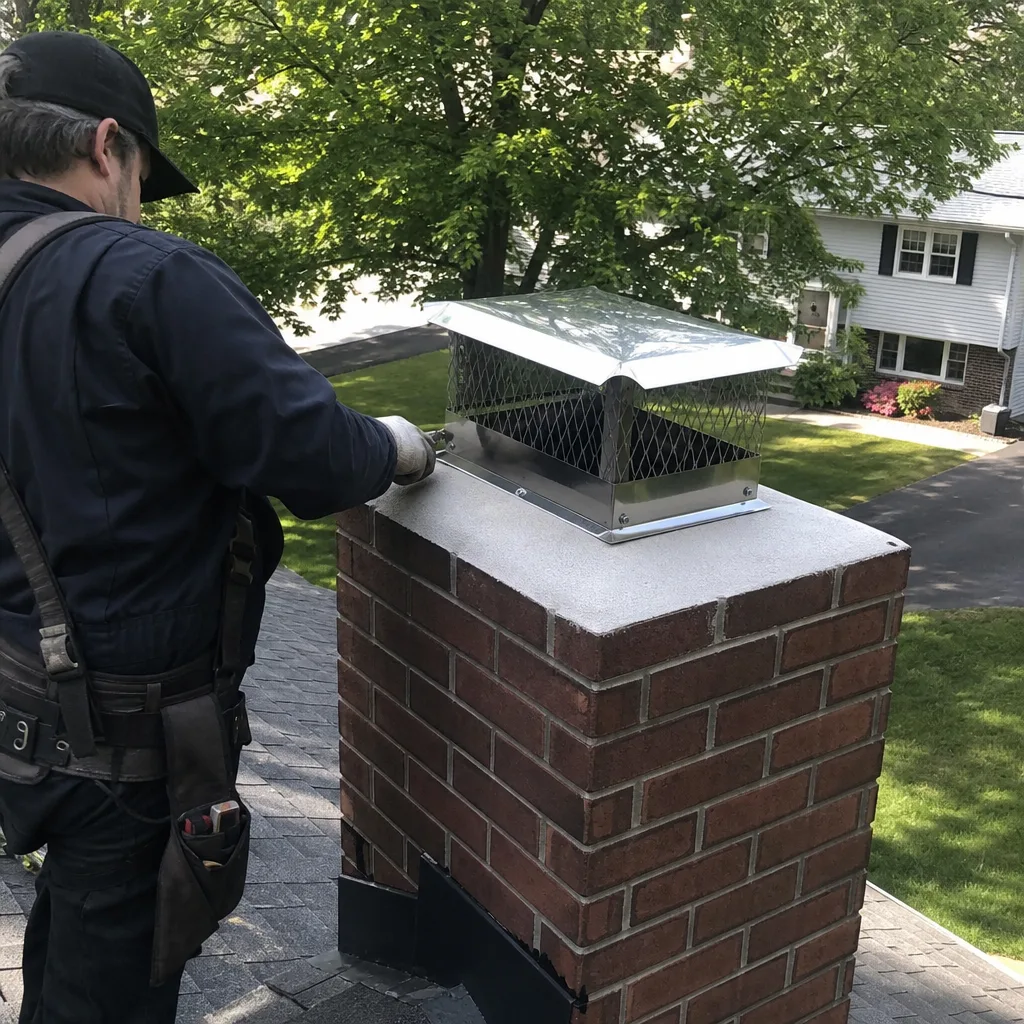
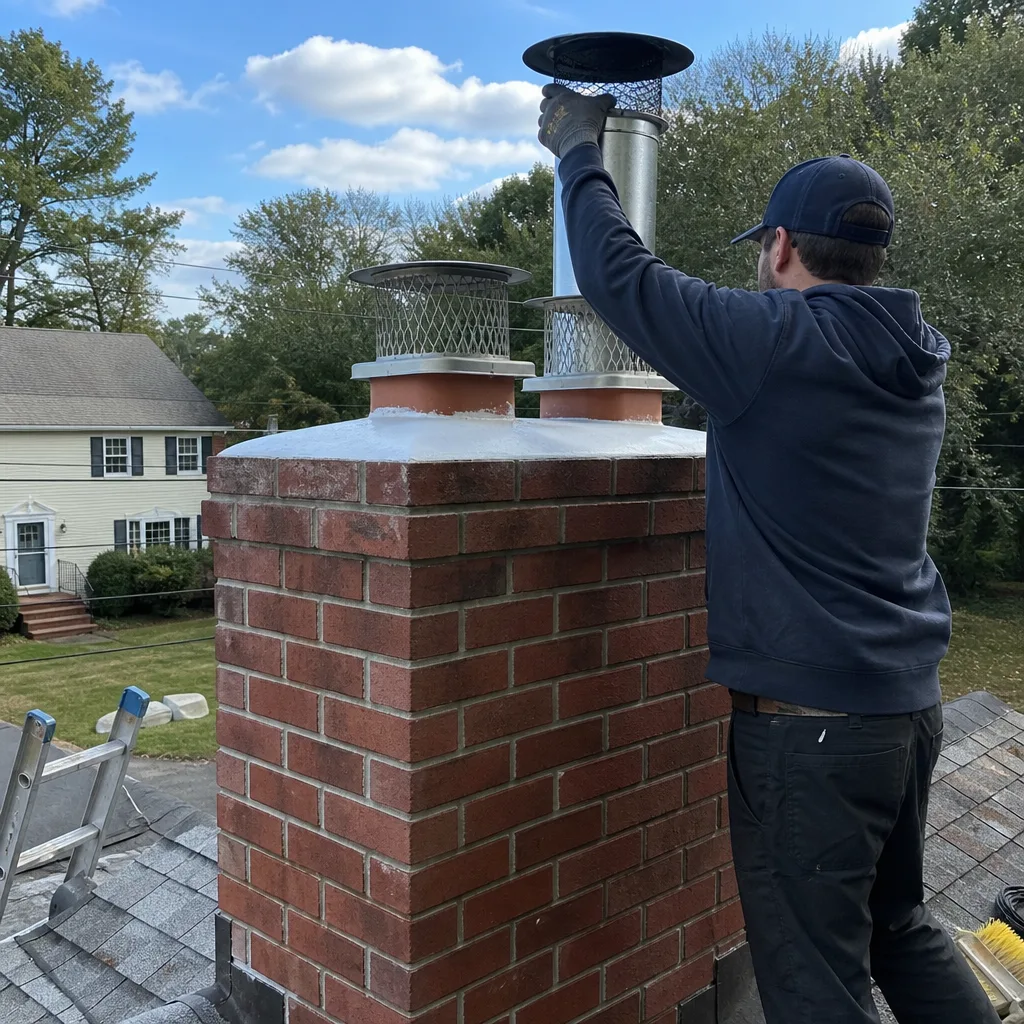
- The firebox is cleaned out, and the sweep checks the damper, the firebrick, and the chimney cap from the roof. Any damage gets noted verbally and in writing, ideally with a photo. You should never be told to replace something without being shown the evidence.
- The work area is left clean. The drop cloths come up, the vacuum goes back in the truck, and the fireplace is ready to use. If you can tell anyone was ever there except for the fact that the flue is clean, that is a point in the company’s favor.
The whole visit for one typical flue should run between 45 and 90 minutes. An hour is normal. If the crew is in and out in 20 minutes, something got skipped. If they are there for four hours, either they found a real problem or they do not know what they are doing.
Level 1 vs Level 2 Inspection: Which One You Need After a Natick Winter
The chimney industry defines three levels of inspection. Most Natick homeowners only ever need the first two, and a surprising number of contractors blur the line between them to pad an invoice.
A Level 1 inspection is what happens during a standard cleaning visit. The sweep looks at the readily accessible parts of the chimney: the firebox, damper, visible liner, cap, and exterior masonry from the ground or roof. No special tools, no major disassembly. If you burn regularly and nothing has changed about your fireplace, a Level 1 is sufficient, and it is included in the cost of the sweep.
A Level 2 inspection is a deeper look, and it is what Natick homeowners should get in four situations: after a chimney fire, after a harsh winter with heavy freeze-thaw cycles, before buying or selling a home, or after making a major change to the heating appliance, like an oil-to-gas conversion. A Level 2 uses a camera to see the full interior of the flue, looking for cracked tiles, failed mortar joints, hidden blockages, and liner damage that an eye from the roof would miss. It costs more than a sweep alone, typically between $150 and $350 on top of the cleaning in this market, and it is the only way to know what is happening inside an old clay liner.
After a Natick winter with hard freezes and fast thaws, the right answer for most pre-1970 chimneys is a Level 2. The freeze-thaw cycle pushes moisture into the masonry, and when that moisture expands as ice, it widens hairline cracks. A chimney that looked fine in October can have a cracked flue tile by March, and you will not know from the couch. The camera knows. At Top Hat Chimney, the camera footage and a plain-English verdict come with every inspection, no exceptions.
Oil-to-Gas Conversion and What It Means for Your Liner
Oil-to-gas conversion is common in Natick, and it creates a specific problem most homeowners never hear about until it is expensive. When a house built before roughly 1985 switches from oil heat to natural gas, the old boiler flue almost always needs a stainless steel liner installed inside the original tile flue.
Here is why. Natural gas burns cooler and wetter than heating oil. The water vapor in gas combustion exhaust condenses on the walls of an old clay flue instead of passing through as vapor. That condensate is mildly acidic, and over time it etches the clay tile and the mortar joints. The damage happens from the inside out, and the first sign is usually flaking tile pieces in the cleanout at the base of the chimney, or a stain on the ceiling near the chimney chase. By then, the liner has been failing for a while.
The fix is a properly sized stainless liner, and this is where brands matter. Top Hat Chimney works with DuraFlex, Olympia Chimney, and Copperfield venting products, because a liner is not a generic part you pick up from a catalog. It has to match the BTU output of the new boiler, the height of the flue, and the diameter of the existing opening. A liner that is too large causes the same slow-draft condensation problem you were trying to solve. Too small, and the exhaust backs up into the house.
After any oil-to-gas conversion, have the flue inspected and do not assume the old tile liner is fine just because the old oil system never caused a visible problem. The old system ran hot. The new one runs cool. They are not the same chimney, even when they are.
How Much Chimney Cleaning Costs in Natick
Pricing in Natick follows a predictable range, and anyone quoting far outside it either does not know the market or is padding for a reason. Here is what a straightforward cleaning should run.
| Service | Typical Cost Range in Natick | Notes |
|---|---|---|
| Standard sweep, one flue, Level 1 | $180 – $280 | Most common price for a simple fireplace or wood stove |
| Heavy creosote (3rd degree glazing) | $320 – $450 | Requires chemical treatment and multiple passes |
| Level 2 camera inspection | $150 – $350 | Added to a sweep, or charged on its own for real estate |
| Chimney cap replacement | $120 – $320 | Stainless cap, installed, depending on flue size |
| Stainless steel liner installation | $2,500 – $6,000 | Material and labor, size and height dependent |
| Oil-to-gas liner inspection | $150 – $250 | Camera run on the new gas vent application |
These numbers reflect what we have seen in this market. They are not a menu at a national franchise, and they are not a bait price designed to get a crew to your door where the number climbs. At Top Hat Chimney, the number you hear on the phone is the number on the invoice, every time. No trip charge inside our service county, and $40 off any repair over $200 is a standing offer we do not rotate in and out.
The fair question every homeowner should ask is not only “how much” but “how much if you find something.” A cheap sweep can become an expensive repair the moment the crew finds a cracked liner, and suddenly you are getting a hard sell on a $4,000 replacement with no camera evidence. The most expensive chimney cleaning in Natick is the one sold by someone who wanted to be there for a different reason. Our How to Hire a Chimney Cleaning Contractor in Natick: A Step-by-Step Guide shows what to look for. Ask for the camera footage before you agree to anything beyond the sweep.
Red Flags the Company You Hired Is Not Doing the Job
We have been in more Natick chimneys than we can count. Ask anyone on your street. And we have repaired the work left behind by companies that charged for a cleaning and delivered a light dusting. The signs are consistent.
- The visit takes under 30 minutes for a full flue. A proper single-flue sweep with dust control, top-down brushing, smoke shelf cleaning, and a cap check cannot be physically completed in 20 minutes. If the truck parks, the brush runs twice, and the invoice appears, something was skipped.
- No drop cloths and no vacuum. Soot flies. A company that cleans chimneys without serious dust control either does not actually clean the flue thoroughly or is willing to leave the mess in your living room and call it done.
- The price changed at the door. The phone quote should match the invoice unless there is a structural surprise that gets photographed and explained before any work proceeds. A last-minute charge for a “heavy creosote assessment” is a common upsell tactic. The flue is either heavily glazed or it is not, and the camera shows it.
- They recommend a liner replacement without camera evidence. This is the big one in Natick, especially after an oil-to-gas conversion. No one can tell you a liner is cracked by looking at the top of the chimney from the roof. The only way to know is a camera run, and you are entitled to see the footage before you write a check for thousands of dollars. If they will not show you, show them the door.
- They do not get on the roof, or they do not even own a ladder tall enough. Some chimneys are accessible from below. Most of the colonials and capes in this town need a roof walk and a top-down cleaning. If the company is doing every chimney from the firebox with a rotary whip, they are leaving half the flue uncleaned.
- The crew cannot tell you what kind of liner you have. Clay tile, pumice, stainless, cast-in-place. A real sweep knows within 30 seconds of looking. If the person at your fireplace struggles to describe what they are cleaning, you are dealing with a trainee on commission.
When to Sweep and How Often in Natick
The standard rule is simple: once a year, burn or no burn. Chimneys break in the off-season too. In Natick, the best time to schedule is late summer or early fall, before the first fire of the season, for three reasons. For a full year-round breakdown, see our Seasonal Chimney Cleaning Care for Natick: Year-Round Homeowner’s Guide. First, you burn off the summer’s accumulation of dust, debris, and whatever the birds and squirrels have been doing in there. Second, you catch cracked tiles from the previous winter’s freeze-thaw before you light another fire against them. Third, you skip the October rush when every chimney company in Middlesex County is booked three weeks out.
If you burn more than three cords a year, or you burn green wood, or your fireplace is a pre-1970 masonry chimney with an oversized flue, a mid-season check in January or February is not excessive. A hard freeze and thaw cycle mid-winter pushes moisture into any cracked masonry, and a quick inspection costs less than a chimney fire. Homeowners in the older sections of Natick, around the original town center neighborhoods where 1920s and 1930s homes are common, should pay attention to this more than someone in a development built in 2005.
Burn only well-seasoned hardwood, split and stacked under cover for at least a year. Oak needs closer to 18 months. It burns hotter, cleaner, and produces less of the wet smoke that builds first-degree creosote. First-degree creosote is a brush job. Third-degree is a glaze, catch it early.
Common Mistakes to Avoid
- Skipping a sweep because the fireplace “looks fine.” Creosote does not announce itself until there is enough to ignite, and a chimney fire destroys a liner in minutes. What you see from the hearth tells you nothing about the flue.
- Burning pine and other resinous softwood because it was cheap or free. Pine burns hot and fast and loads the flue with oily creosote. The savings on firewood get refunded as a chimney repair.
- Ignoring small cracks in the crown or missing mortar joints. Water is the enemy of masonry, and in Natick‘s freeze-thaw climate, a small crown crack becomes a spalled brick and then a leak into the house. Small repairs now beat rebuilds later.
- Assuming a chimney sweep and a chimney inspection are the same thing. A sweep cleans. An inspection tells you whether the chimney is still safe to use. After a chimney fire, a Level 2 is not optional.
- Buying a home without a Level 2 inspection. The standard home inspection glances at the chimney from the ground. It does not run a camera up the flue. In Natick‘s older housing stock, a $300 camera inspection routinely saves a buyer from a $5,000 liner replacement they did not know was coming.
- Letting a handyman “clean” the chimney to save a few dollars. A chimney is part of a working fire safety system. A handyman with a brush from a hardware store cannot determine whether the liner is damaged, and a missed crack is a house fire risk. This is one job where the license matters.
When to Call a Professional
Call a professional if you see white or black staining on the ceiling or walls around the chimney, if you smell smoke in the house after the fire is lit, if the damper is rusted shut or stuck open, if you see flaking tiles at the bottom of the chimney cleanout, or if it has simply been more than a year since anyone looked. Any of those conditions warrants a camera inspection, not just a brush run. A chimney that has not been cleaned in years may have hidden creosote or a damaged flue liner, and lighting a fire against either one is how chimney fires start. Top Hat Chimney offers free estimates in Natick, call (781) 378-5846. Wendell answers the phone, and the number you get on the call is the number on the invoice.
Frequently Asked Questions
A chimney sweep in Natick typically costs $180 to $280 for a standard single-flue cleaning, with heavy creosote glazing running $320 to $450. The price should include a basic Level 1 inspection, and you should never pay a “diagnostic” fee just to get a quote. Call (781) 378-5846 for an exact price on your chimney, estimates are free.
A chimney in Natick should be cleaned once a year, even if you rarely use the fireplace. The wet, freeze-thaw climate ages masonry chimneys even without a fire, and annual cleaning is the simplest way to catch cracked tiles and cap damage before they become a water leak or chimney fire.
You need a new liner if a camera inspection shows cracked or missing tile sections, if the flue is unlined and serving a wood-burning appliance, or if the old tile liner is oversized for a new high-efficiency appliance after an oil-to-gas conversion. Do not accept a liner replacement recommendation without seeing the camera footage yourself. Nothing gets recommended at Top Hat Chimney unless you can see the evidence, every time.
Creosote builds up on the flue walls, and at a certain thickness it becomes fuel. A hot fire can ignite it, and the resulting chimney fire can reach 2,000 degrees, crack the clay liner, spread to the framing, and turn a $200 cleaning into a $20,000 rebuild or worse. The risk is not hypothetical in Natick‘s older homes, and the fix is a phone call. Call (781) 378-5846 and get it on the calendar.
A sweep is the physical brushing of creosote and soot from the flue. An inspection is a visual or camera-based assessment of the structural condition of the chimney, from the firebox to the cap. A standard cleaning includes a Level 1 inspection. A Level 2 inspection uses a camera and is needed after a chimney fire, after a harsh winter, or before a real estate transaction.
It depends on the chimney and the appliance. Stainless-lined wood stoves and many modern inserts can be cleaned from inside the house. Traditional masonry fireplaces in Natick‘s colonials and capes usually require a top-down cleaning from the roof to get the full flue brushed. A company that cleans every chimney from below is skipping the top third of the flue.
The Bottom Line
Natick’s older homes need a chimney cleaning once a year, whether the fire burns all winter or barely at all. The damp New England climate and the particular vulnerabilities of clay-tile liners mean the risk of skipping a year is higher here than in almost any other type of housing market. A proper sweep takes about an hour, costs $180 to $280 in this area, and includes a Level 1 inspection as part of the job. After anything unusual, a harsh winter, a chimney fire, an oil-to-gas conversion, a home purchase, get a Level 2 camera inspection. And before anyone recommends a liner replacement, demand to see the footage. If the company will not show you, call someone who will. Top Hat Chimney has been serving Natick area homes since 1999, and Wendell puts his name on the work and runs into you again on Saturday. For a free estimate or a fireplace service in Natick, call (781) 378-5846. For chimney repairs, the same number gets you a real person, 24 hours a day.
Written by Wendell Pike, Owner at Top Hat Chimney, serving Natick since 1999.