
Last updated September 10, 2026
Level 1 sweep and inspection to the NFPA 211 annual standard - flue, crown, cap, and flashing checked and photographed
Chimney sweep logs do not sweep chimneys. They loosen some creosote - which then falls where a brush and vacuum still have to collect it.
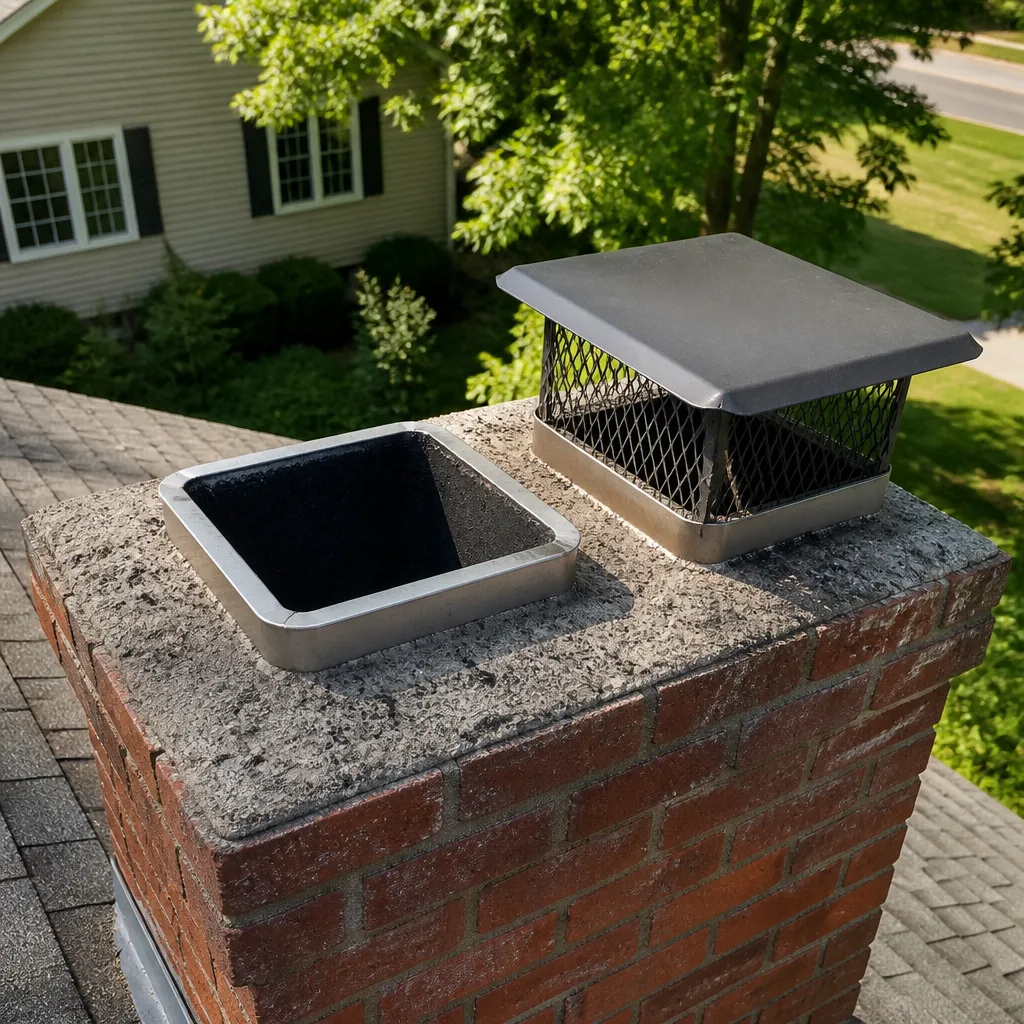
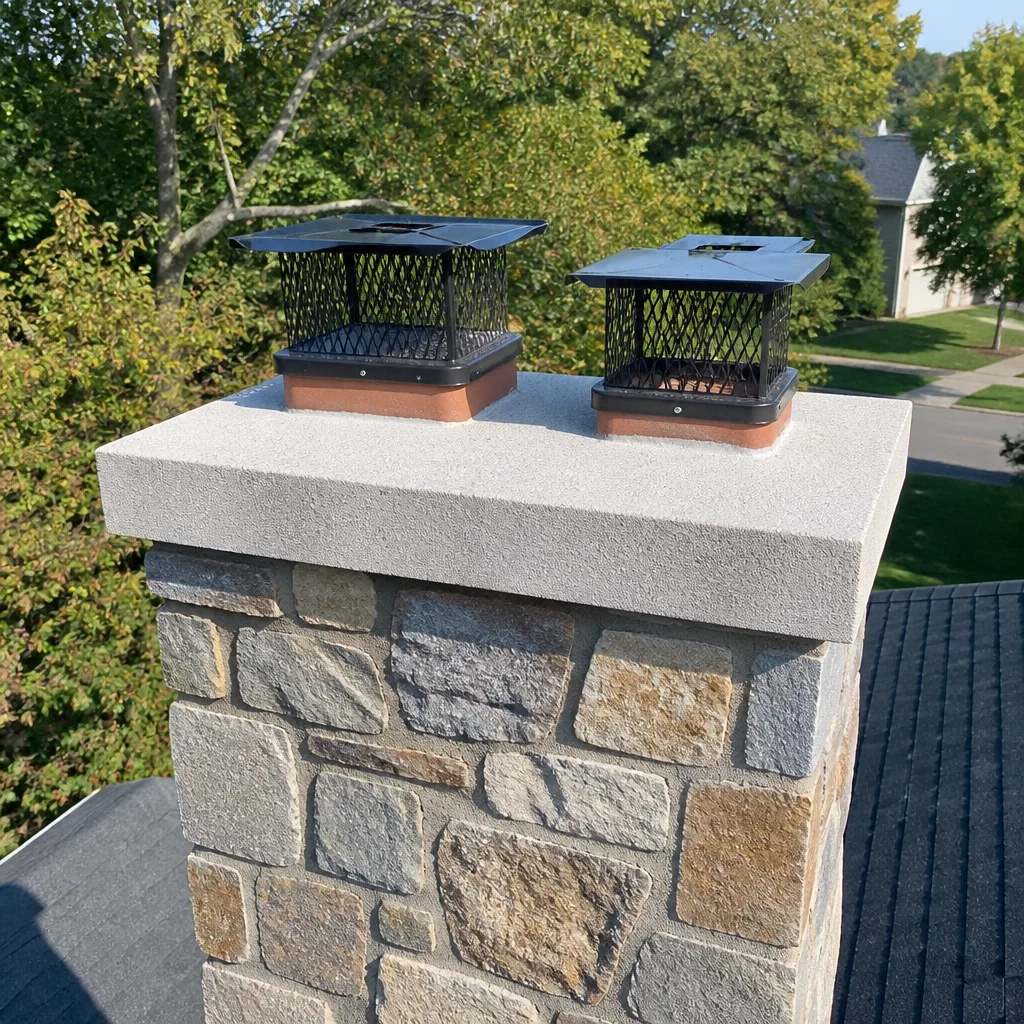
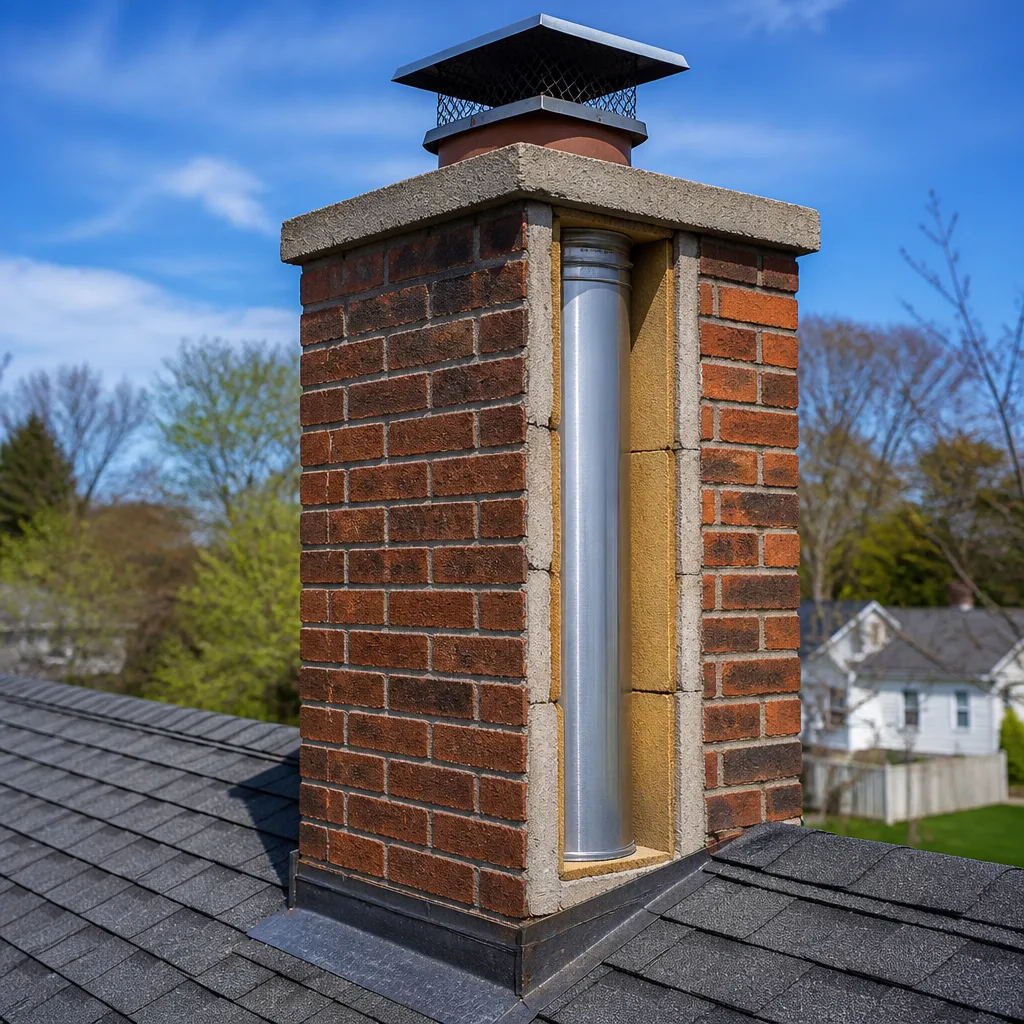
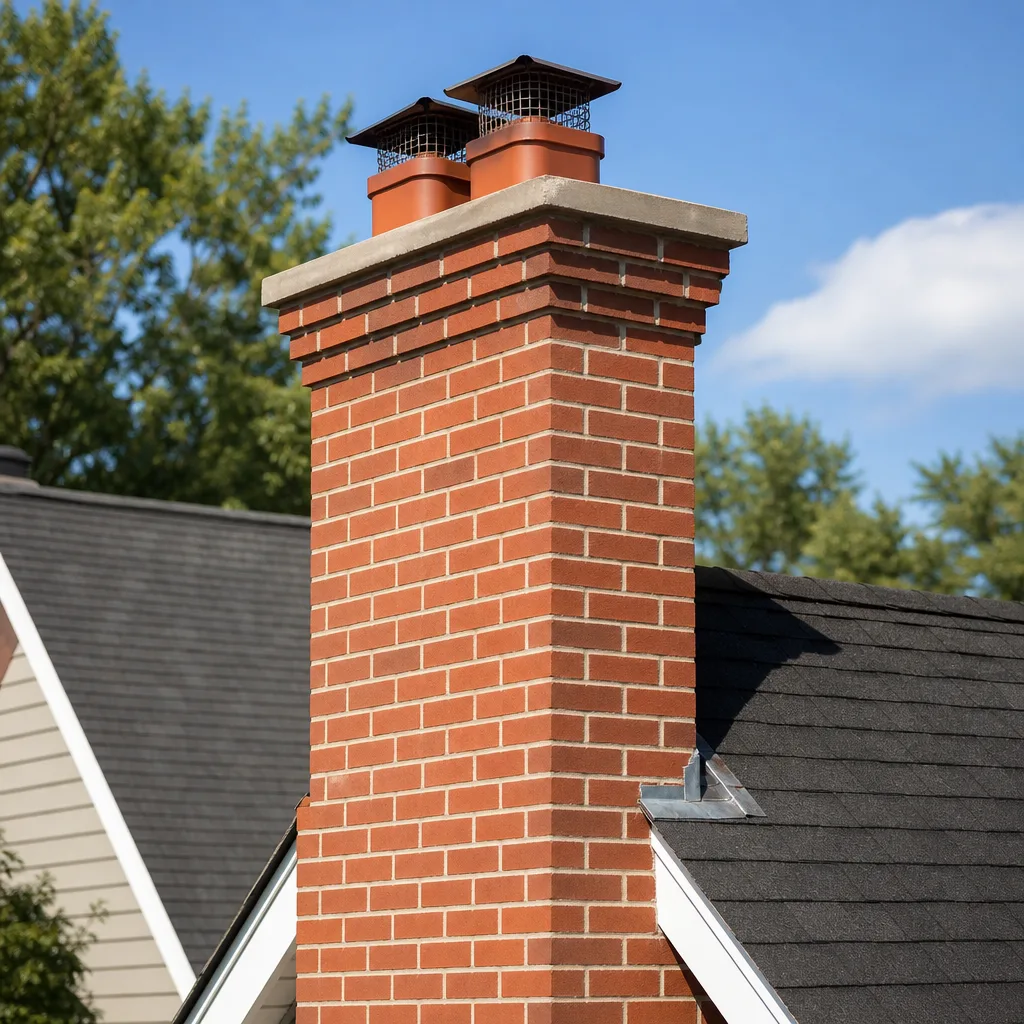
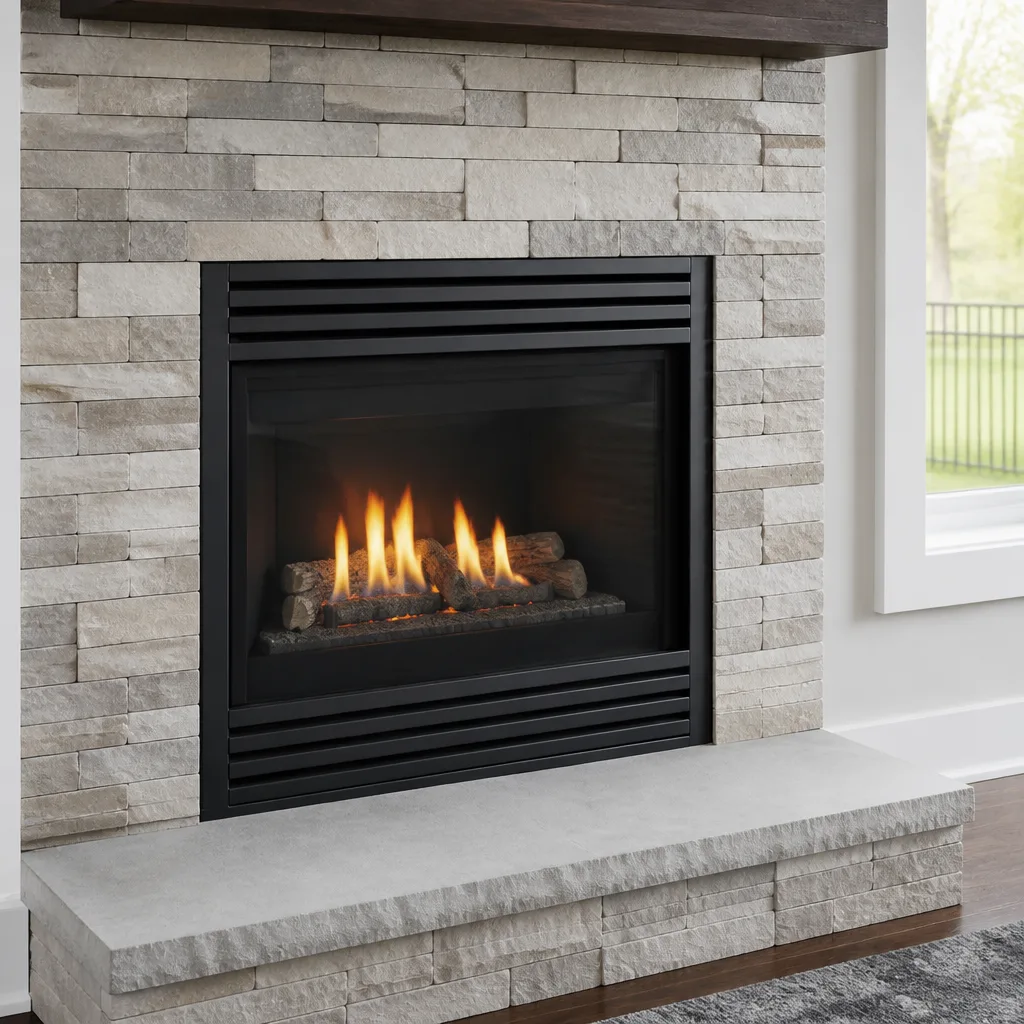
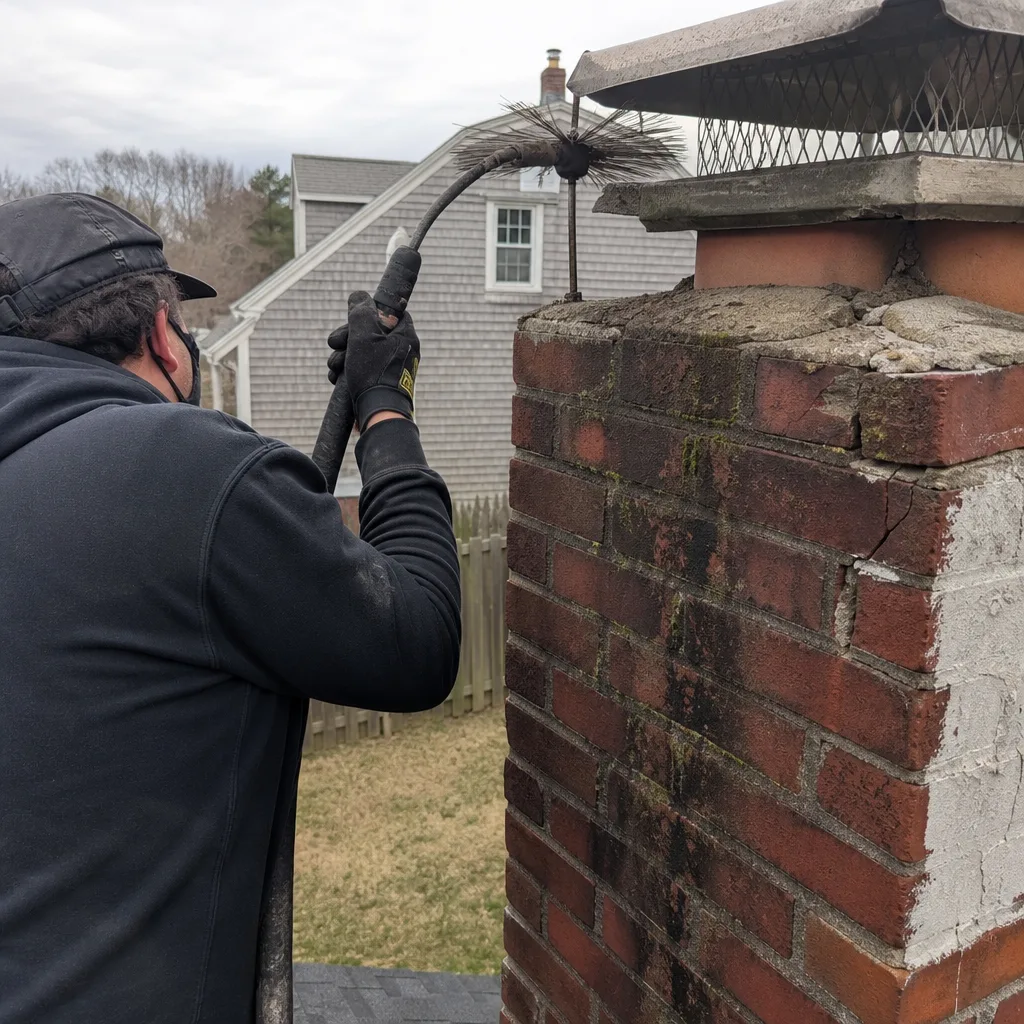 Before
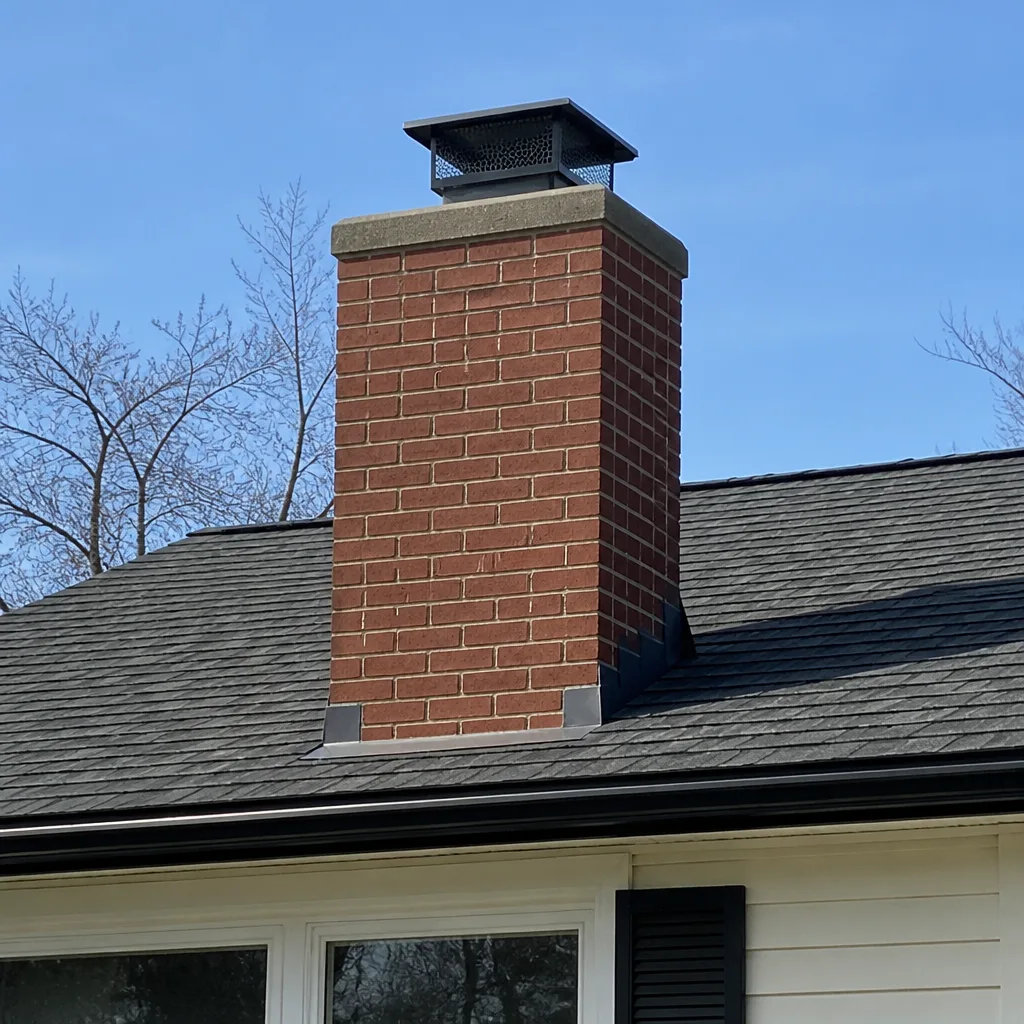 After
After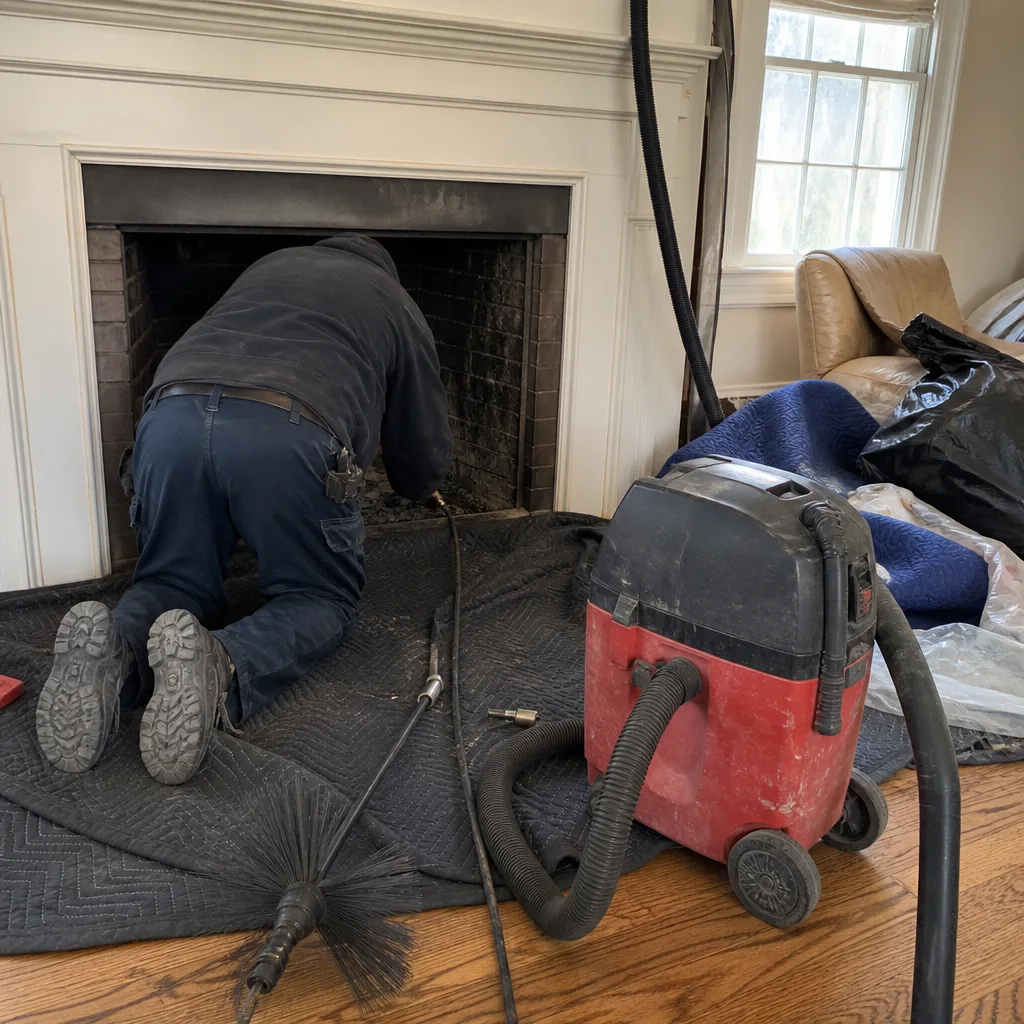 Before
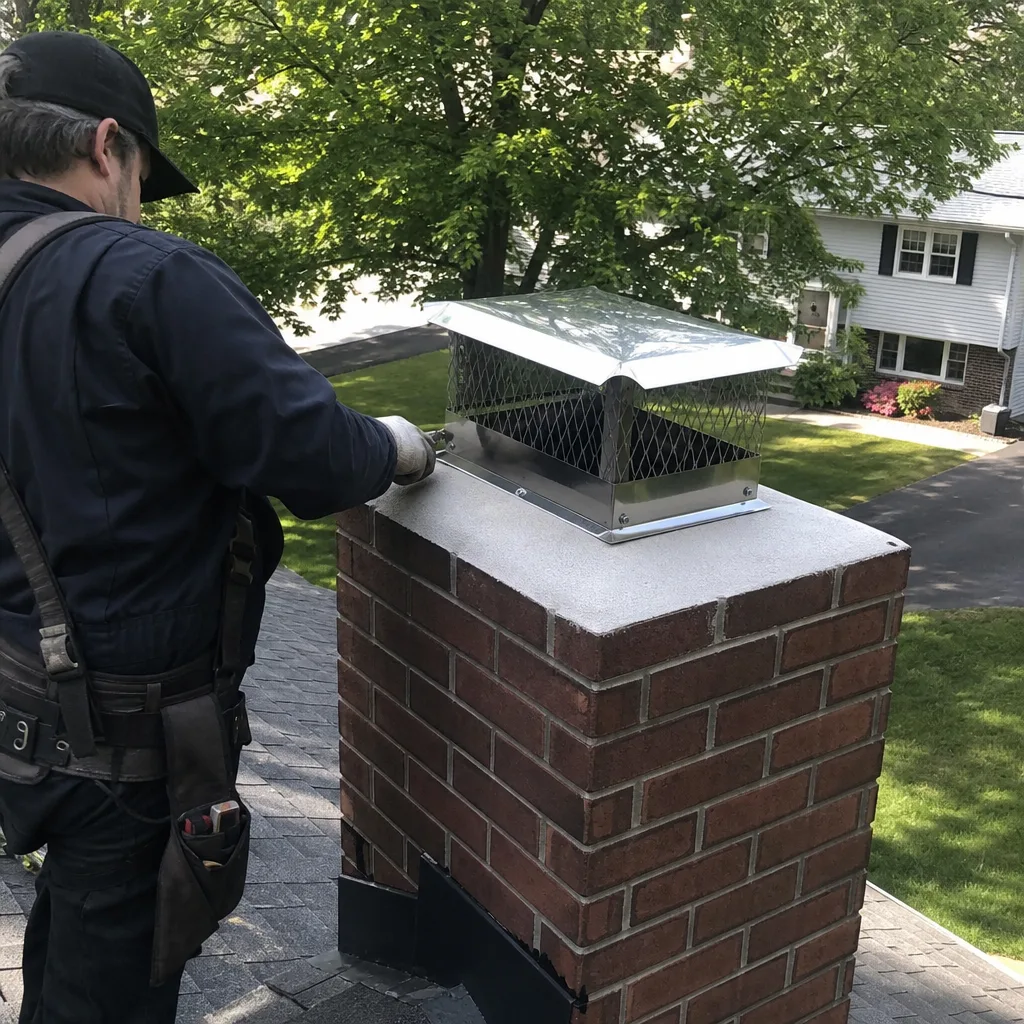 After
After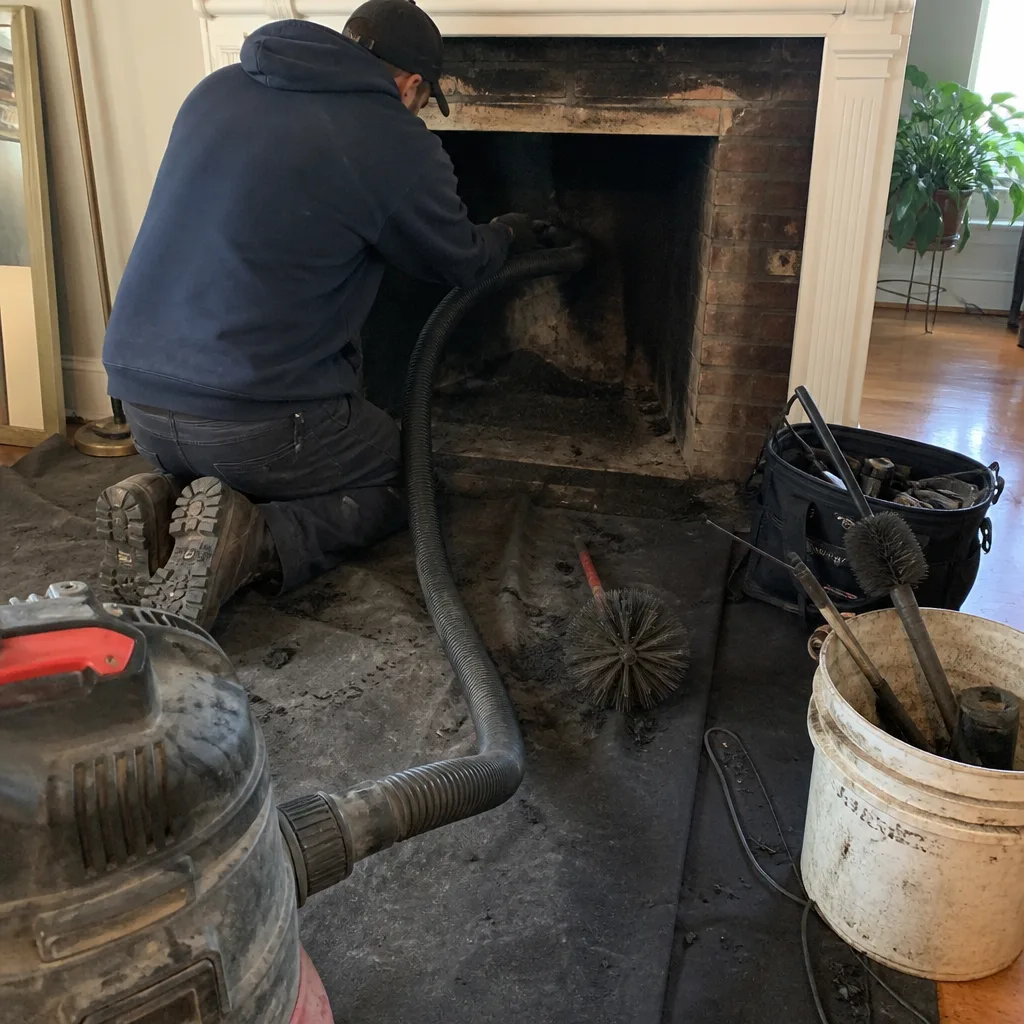 Before
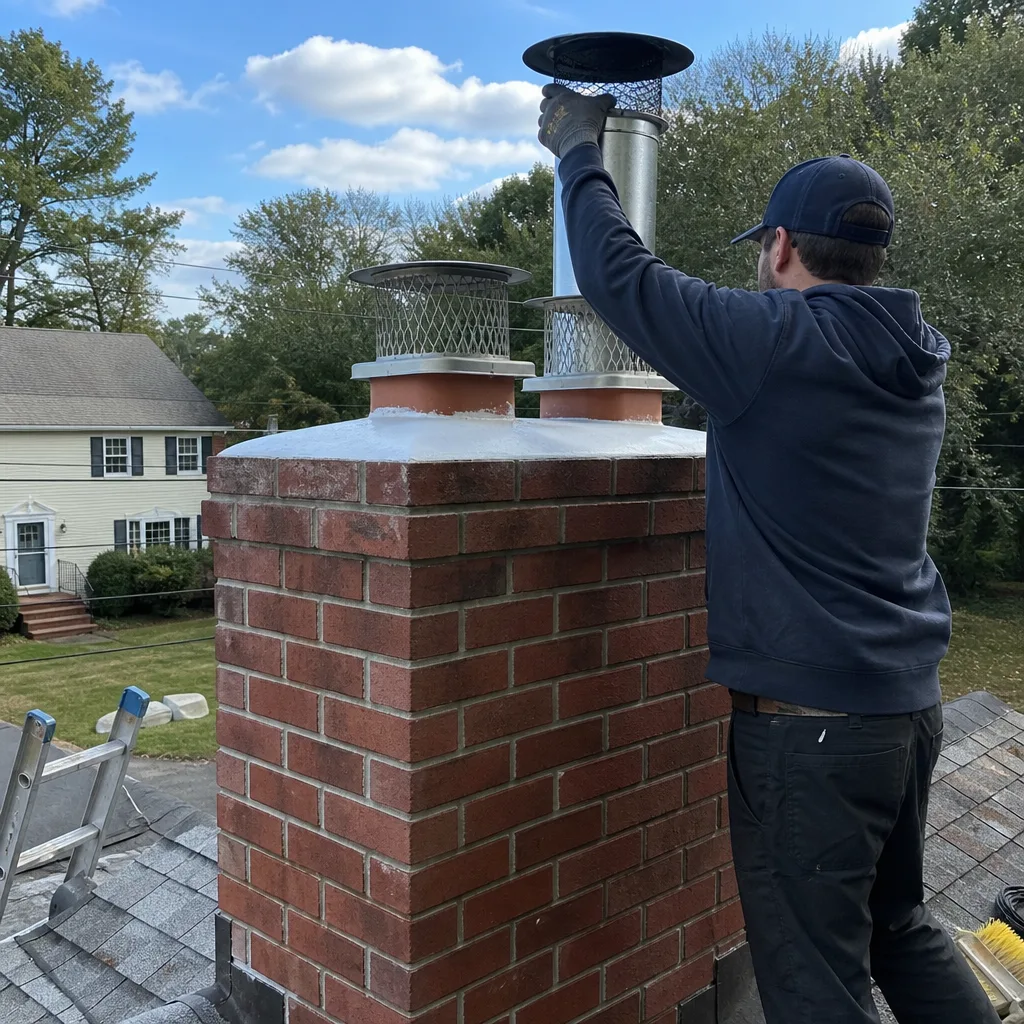 After
AfterDIY vs Professional Chimney Cleaning: The Natick Homeowner’s Decision Guide
Here’s something most guides won’t tell you: the biggest risk in Natick chimney cleaning is not a dirty flue. It is what a homeowner cannot see while standing on a ladder with a hardware store brush. Homes in this town skew older, and the chimneys that serve them often carry clay tile liners that have been quietly cracking for decades. You can pull a brush through and make the inside look cleaner without ever knowing the liner is compromised. This guide will show you exactly where the line sits between a reasonable weekend project and a job that needs a trained eye, a camera, and someone with 26 years of Natick rooftops behind him.
Quick Answer
Light maintenance work like checking the cap, testing the damper, and keeping the hearth clean is something a careful Natick homeowner can absolutely do themselves. But full mechanical cleaning is a different job than it looks on video, especially in homes built before 1970 with clay tile liners, where a brush can dislodge debris into a crack you can’t see. If your chimney has gone more than three years without a professional cleaning and inspection, skip the DIY attempt entirely and read our guide on How to Hire a Chimney Cleaning Contractor in Natick: A Step-by-Step Guide, then call (781) 378-5846.
Table of Contents
- What You Can Safely Do Yourself
- Why Older Natick Chimneys Change the Math
- The Real Cost Comparison: DIY vs Professional
- What Happens When Creosote Gets Disturbed
- The Three-Year Rule: When to Skip DIY Entirely
- What a Camera Sees That Your Eyes Can’t
- Tools and Products Worth Your Money
- Common Mistakes to Avoid
- When to Call a Professional
- Frequently Asked Questions
- The Bottom Line
What You Can Safely Do Yourself
Let’s start with what we actually encourage. Not every chimney task requires a service call, and we’d rather you spend your money on the things that matter. Here’s the honest list of maintenance work a careful homeowner can handle without calling us, and the best part is that every one of these tasks reduces wear on your system over time.
These are the jobs we tell our own neighbors to take on:
- Visual exterior inspection. Stand in your yard with binoculars and look at your chimney crown. Check for missing mortar, cracked cap material, or a leaning stack. You are looking for obvious changes from season to season. A crown that starts crumbling will only get worse through a Natick winter, and catching it early saves real money.
- Cap and screen checks. If you have a chimney cap, make sure it is still seated properly and the mesh screen is not clogged. A clogged screen restricts draft and makes your fireplace smoke. A missing cap invites rain, squirrels, and every starling in Middlesex County.
- Damper operation. Open and close your damper a few times over the summer. If it sticks, grinds, or will not fully seat, that’s a simple repair that should be addressed before burning season. A damper stuck open pulls heated air out of your house all winter long.
- Firebox and hearth cleaning. Sweep out cold ash and charred wood remnants from the firebox. Use a small shop vacuum or ash scoop. This is routine housekeeping, not chimney cleaning, and it makes your fires burn better.
- Smoke and carbon monoxide detector testing. Replace batteries twice a year and make sure detectors are installed on every level. This is the single most important piece of chimney safety equipment in your house, and it has nothing to do with the chimney itself.
What these tasks share is that none of them require you to get onto the roof or insert a tool into the flue. That is where the line starts to matter. We have walked into too many Natick living rooms where a homeowner’s well-intentioned weekend project uncovered a problem that then sat unattended for six months because no one knew it was there. Basic inspection is good. Basic inspection without follow-through is not.
Why Older Natick Chimneys Change the Math
Natick’s housing stock is not new. A large portion of the homes we service were built before 1970, and many go back to the 1920s and 1930s. That matters because chimney construction standards were different then. The clay tile liners used in those decades perform well under certain conditions, but time, weather, and heat cycling take a toll that is invisible from the outside.
Here is the specific problem: clay tile liners crack. When they crack, hot gases and creosote can migrate into the space between the liner and the surrounding masonry. A homeowner running a brush down the flue has no way to know this is happening. The brush glides over the crack, knocks some creosote loose, and some of that material drops into the gap. You have just moved flammable material into a spot where it can accumulate against wood framing over time.
In newer metal-lined chimneys, this specific risk largely does not exist. Stainless liners are continuous, and the connection points are engineered to handle thermal expansion. That is why the Chimney Cleaning & Sweep in Natick process we follow differs completely between older masonry chimneys and newer stainless systems. The older the home, the more caution the job demands.
We are not saying a homeowner can never clean a pre-1970 chimney. We are saying the stakes are higher than in a 2005 colonial with a modern liner. If you live in an older section of town near the center or up along the Charles River, your chimney almost certainly has at least one of these aging factors: clay liner, shallow crown, original mortar joints, or a missing cap. None of those improve with a brush from the roof.
The Real Cost Comparison: DIY vs Professional
Let’s put numbers on the table, because “just do it yourself” is usually framed as a way to save hundreds of dollars. For a detailed Chimney Cleaning Cost Breakdown: The Natick Homeowner’s Reference for 2026, the math is worth seeing clearly.
Here is what a typical DIY cleaning actually costs a Natick homeowner:
- Brush and rod kit: $35 to $90 depending on the size of your flue and whether you buy a basic poly brush or a stiffer wire version.
- Drop cloths, plastic sheeting, tape: $20 to $40 for containing dust inside a finished home.
- Shop vacuum with a fine-dust filter: $80 to $150 if you do not already own one that can handle fine creosote particles. A standard household vacuum will not filter this material properly.
- Safety equipment: $30 to $60 for a respirator with particulate filters, goggles, and gloves. Creosote dust irritates skin and lungs; you do not want it in either.
- Ladder access: $0 if you already own a safe extension ladder that reaches your roofline. $150 to $300 if you need to buy or rent one.
- Time: Three to five hours for a first-timer on a one-story roof, and longer for taller homes. Time on a pitched roof does not get faster with practice.
A professional chimney sweep in Natick typically ranges from $180 to $350 depending on the chimney’s condition, height, and whether it has been cleaned recently. That number includes the cleaning itself, the inspection, and the written report.
What the professional price includes that the DIY price cannot buy:
- Trained visual inspection of the flue interior, smoke shelf, and firebox for cracks, gaps, and blockages.
- Camera inspection of sections that cannot be seen from either end of the flue.
- Containment using commercial vacuum systems with HEPA filtration that keep creosote dust out of your furniture and lungs.
- Creosote grading so you know whether you are dealing with a routine Stage 1 situation or a Stage 3 glaze that requires mechanical removal.
- A written record that matters for insurance documentation and resale disclosure.
The honest comparison is not “$30 brush kit versus $250 service call.” It is “$30 brush kit plus your Saturday plus your lungs plus the crack you will not see versus a trained visit with equipment that costs thousands and a camera that shows you exactly what is in your flue.” We will always tell people this: if the chimney is new, the liner is stainless, and you have cleaned it yourself before, the brush kit is a reasonable call. That described almost none of the homes we service in Natick.
What Happens When Creosote Gets Disturbed
Your flue doesn’t care how the fire looks. It cares how it breathes. Every fire deposits creosote on the interior walls of the flue, and that creosote comes in three stages that behave very differently.
Stage 1 is powdery and flaky, gray or brown, and it brushes off with modest effort. This is the creosote a homeowner cleaning their own chimney will most often encounter, especially on a flue that was professionally cleaned within the last year or two.
Stage 2 is the problem child. It is tar-like, shiny or crusted, and it does not brush off. It sticks. When a homeowner runs a brush over Stage 2 creosote, the brush glides across the surface, polishing the top layer while leaving the bulk of the deposit in place. The flue looks better to the naked eye and performs exactly as poorly. To remove Stage 2, you need rotary tools and chemical treatments that break down the tar. That equipment is not on the shelf at the Natick hardware store.
Stage 3 is a glaze, hard and glassy, and it is a chimney fire waiting to happen. If you have Stage 3 creosote and you run a brush over it, you have done nothing except give yourself false confidence. Third-degree creosote is a glaze, catch it early. That means a professional treatment like HeatShield or a chemical conversion process, not a brush.
The practical issue is that a homeowner cannot reliably tell which stage they are dealing with until they get into the flue, and by then the dust is already in the house. A professional chimney sweep tells you the stage before work begins, and uses methods matched to what is actually there.
The Three-Year Rule: When to Skip DIY Entirely
There is one situation where we will always tell a Natick homeowner to put the brush kit back in the garage and call a professional instead, and that is when the chimney has gone more than three years since its last professional cleaning and inspection.
Here is why:
- Creosote has had time to advance. Three years of regular burning deposits material that most DIY tools cannot fully remove. What starts as Stage 1 can progress to Stage 2, and a brush alone will not touch it.
- Blockages become likely. It takes time for a bird’s nest, an animal intrusion, or a leaf accumulation to build to the point where it blocks the flue. Three years is enough time for that to happen in most neighborhoods in Natick.
- Hidden damage compounds. A small crack in a clay liner may not change anything in year one. By year three, it has widened, let moisture in, and set up freeze-thaw stress through the winter. That is when expensive problems start showing up.
- The off-season causes its own problems. Once a year, burn or no burn. Chimneys break in the off-season too. Moisture gets in, mortar crumbles, and a chimney that worked fine last spring may be dangerous by November.
After three years, the job has shifted from “routine cleaning” to “cleaning plus an assessment of what has changed.” That requires eyes on the liner, a camera in the flue, and a sweep who can tell you plainly whether you need repairs or just a cleaning. The three-year mark is a good rule of thumb for when to skip the ladder and call (781) 378-5846.
What a Camera Sees That Your Eyes Can’t
This is the one point we want every Natick homeowner to understand clearly, because it explains more of our call volume than any other single factor. A chimney flue is a long, dark, narrow passage. You cannot see most of it from the roof. You cannot see most of it from the firebox. You can look up from the damper and see maybe three feet, and you can look down from the crown and see maybe four. The middle is invisible.
We run a camera through every chimney we clean, no exceptions. The camera footage and a plain-English verdict every time, no exceptions. What that camera shows is the difference between a chimney that will burn safely for another winter and one that needs a liner repair before anyone thinks about lighting a fire.
Here is what a camera inspection finds that a visual check misses:
- Hidden cracks in clay tile liners at the joints or mid-section where heat and moisture have done their work.
- Gaps in mortar joints that let hot gases reach the surrounding structure.
- Nesting material or dead animals that sit below the line of sight from either end.
- Structural shifts that suggest settling or more significant masonry problems.
- Previous repairs that are failing - and we see a lot of them in this town, because older homes have a repair history that newer ones simply don’t.
We use brands like Gelco, Olympia Chimney, and Famco components in our work when repairs call for durable materials. But before any repair recommendation, the camera goes in and the footage gets reviewed with you, the homeowner, on the spot. Nothing is recommended without camera evidence you can see for yourself.
Tools and Products Worth Your Money
If you are committed to handling light chimney maintenance yourself, you should invest in the right things. Most of what we see in Natick garages is either inadequate for the job or dangerous for the person using it. Here is the honest list of what actually works.
Worth buying as a homeowner:
- A quality ash vacuum with a fine-dust filter. Creosote ash is fine enough to pass through a standard shop vacuum filter and right back into your living room air. A proper ash vacuum makes firebox cleanup safe and quick.
- Chimney cleaning rods and a poly brush sized to your flue. Do not buy the cheap fiberglass rods that flex and snap under pressure. The rod that breaks inside a chimney creates a much bigger problem than the one you started with.
- Creosote sweeping logs for maintenance between professional cleanings. They are not a substitute for cleaning, and they do not remove Stage 2 or 3 deposits, but they can help keep Stage 1 creosote from building up too quickly in a well-maintained chimney.
- A good pair of binoculars for exterior inspections from the ground. You will use them more than any other tool on this list.
Not worth buying as a homeowner:
- Rotary cleaning systems. These cost hundreds and require experience to run without damaging a clay liner. This is a professional tool for a reason.
- Chemical creosote removers marketed as a substitute for sweeping. They can help in specific situations, but they are not a replacement for mechanical cleaning, and using them without understanding creosote stages produces false confidence.
- Cheap chimney cameras from online retailers. They show you something, but the image quality and the interpretation of what you are seeing both matter. We would rather you call us than make a repair decision based on grainy footage.
The real point: spend your money on prevention, not reaction. A cap, a good ash vacuum, and an annual inspection cost less than the liner repair that follows three years of guessing.
Common Mistakes to Avoid
- Cleaning a chimney that has a cracked liner without knowing it. The brush dislodges debris into the crack and makes a bad situation worse. In older Natick homes, this is the single most common DIY mistake we see.
- Using a wire brush on a clay tile liner. Wire brushes can scar and weaken clay tile, especially in older chimneys that have already been through decades of heating cycles.
- Forgetting the off-season. Many homeowners only think about their chimney when they start burning in November. Moisture, animals, and freeze-thaw damage happen all spring and summer long.
- Cleaning without a respirator. Creosote dust is not just unpleasant; it is an irritant that can trigger respiratory problems. A dust mask from the hardware store does not provide adequate filtration for this work.
- Trusting a cleaning log to do the whole job. Creosote logs have their place, but they are a maintenance aid, not a replacement for mechanical cleaning, and especially not in chimneys that have not been professionally serviced in years.
- Skipping the camera inspection after cleaning. Even if you successfully remove visible creosote, you have not verified the condition of what was underneath it. In Natick’s older housing stock, that omission is the difference between a clean chimney and a safe chimney.
When to Call a Professional
Call a professional if you notice any of these in your Natick home: smoke backing up into the room, a strong odor coming from the fireplace even when it is not in use, visible cracks in the firebox or exterior masonry, water staining on the ceiling near the chimney, or animals on the roof near the chimney. All of those are signs the system needs attention beyond what any brush kit can address. Call us before lighting the first fire of the season if you haven’t had the chimney cleaned in more than a year, and always call if it has been more than three.
Top Hat Chimney offers free estimates in Natick - call (781) 378-5846. We will give you the plain truth about what your chimney needs, and we will show you the footage to prove it.
Frequently Asked Questions
A professional chimney sweep in Natick typically costs between $180 and $350 depending on the chimney’s height, condition, and how long it has been since the last cleaning. That price includes the mechanical cleaning, the full inspection, and the written report. Call (781) 378-5846 for an exact quote - estimates are free.
Not always, and this is where we tell you to slow down and ask for proof. A cracked or deteriorated liner is a serious problem, but it is not a diagnosis anyone should hand you without camera footage you can see with your own eyes. We never recommend a liner replacement unless the camera shows clearly that the existing liner has failed, and we will walk you through that footage on the spot. If a company tells you the liner is shot and refuses to show you the images, get a second opinion.
Once a year, burn or no burn. Our climate here in Massachusetts pushes moisture into masonry all winter, and the freeze-thaw cycles do damage whether you use the fireplace or not. See our Seasonal Chimney Cleaning Care for Natick: Year-Round Homeowner’s Guide for what each season requires. An annual sweep and inspection catches both creosote buildup and the structural issues that worsen quietly over the off-season.
Creosote accumulates in stages, and the later stages are flammable. If enough Stage 2 or Stage 3 creosote builds up and a hot fire reaches it, you can have a chimney fire that damages the liner, the surrounding structure, or both. Even without a fire, a neglected chimney can develop blockages that push carbon monoxide back into the living space. That is the risk, and it is avoidable.
Yes, and you should. A visual check from the yard with binoculars will catch obvious problems like a missing cap, a crumbling crown, or loose brickwork. What it will not catch is anything inside the flue, and that is where the serious problems live. Treat your own inspection as a supplement to a professional one, not a replacement.
No. Cleaning logs can help reduce light creosote buildup in a chimney that is already clean, but they will not remove Stage 2 or Stage 3 deposits, and they will not tell you anything about the condition of your liner. Think of them as a maintenance aid between professional cleanings, which is exactly what they are designed to be.
The Bottom Line
The decision between doing it yourself and calling a sweep in Natick comes down to three things: the age of your chimney, the creosote stage you are dealing with, and the last time a professional put eyes and a camera on the flue. On a well-maintained, recently inspected chimney with a stainless liner, light DIY maintenance is reasonable. On an older Natick chimney with clay tiles, more than three years since the last professional visit, or any sign of smoke, odor, or water - call a professional. The camera footage and a plain-English verdict every time, no exceptions. That is how we have worked since 1999, and that is what you will get when you call (781) 378-5846. For more guides & resources, explore our blog, or ask anyone on your street.
Written by Wendell Pike, Owner at Top Hat Chimney, serving Natick since 1999.