
Level 1 sweep and inspection to the NFPA 211 annual standard - flue, crown, cap, and flashing checked and photographed
Chimney sweep logs do not sweep chimneys. They loosen some creosote - which then falls where a brush and vacuum still have to collect it.
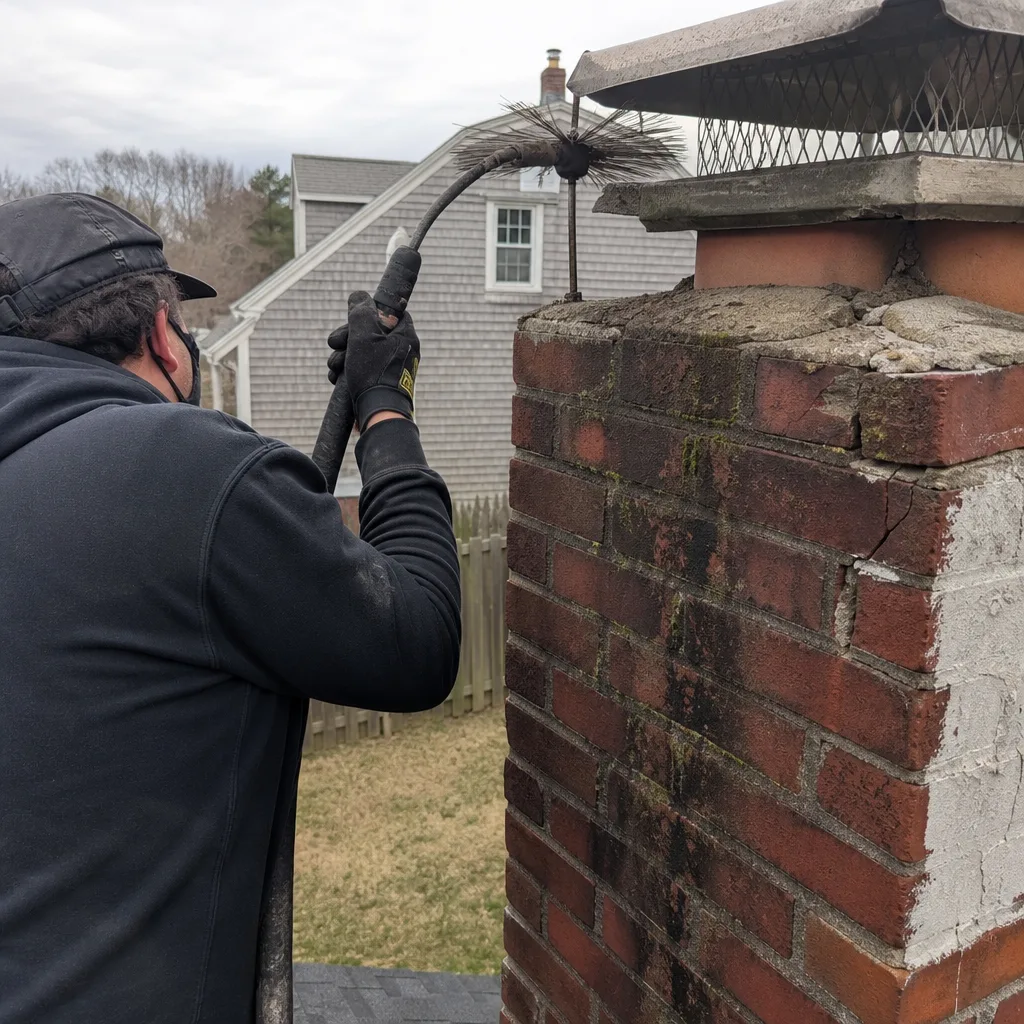 Before
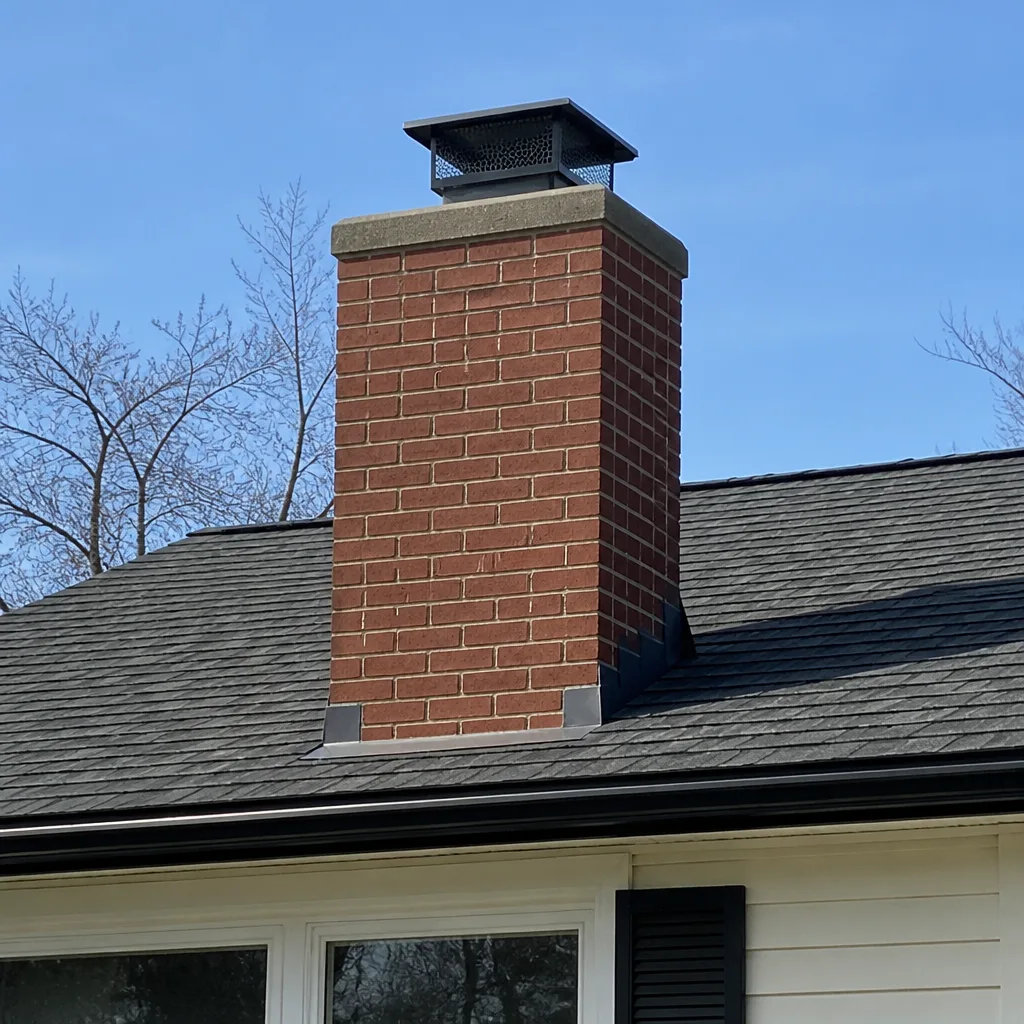 After
After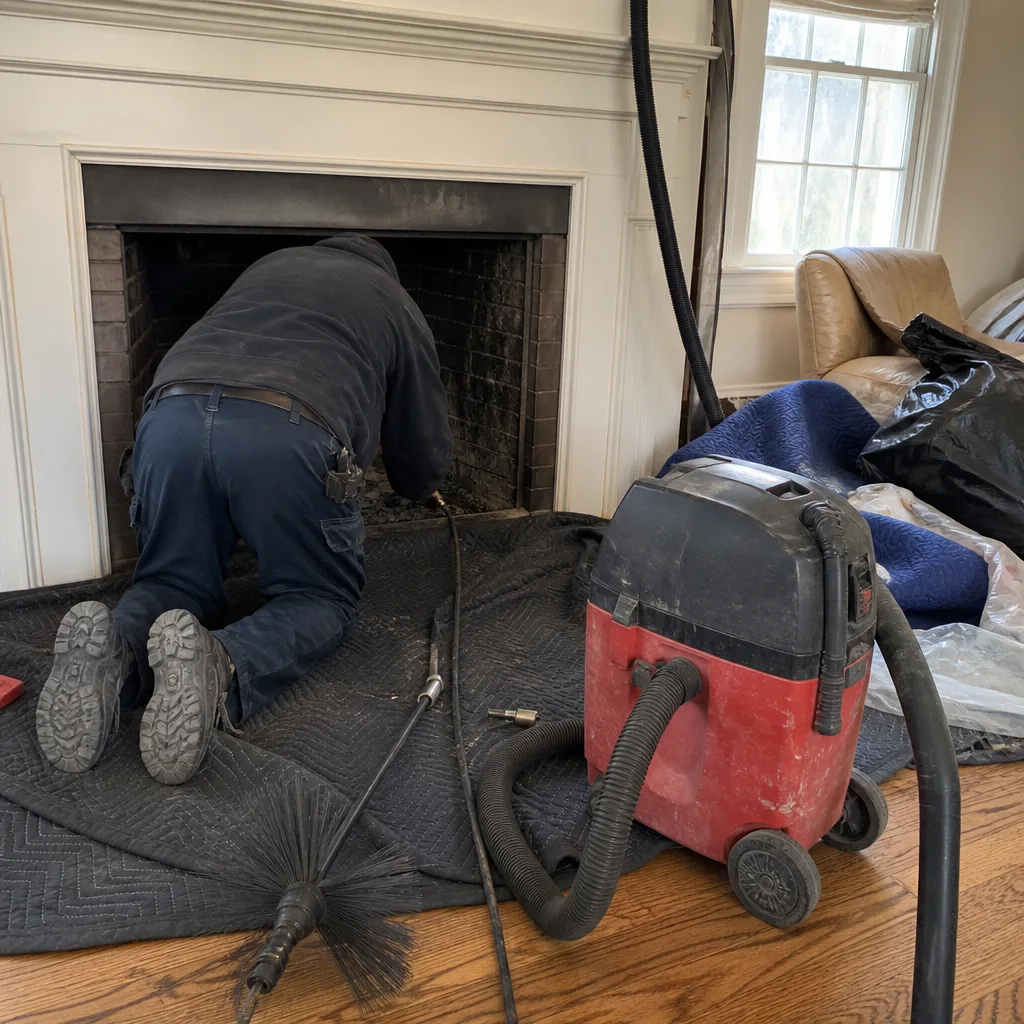 Before
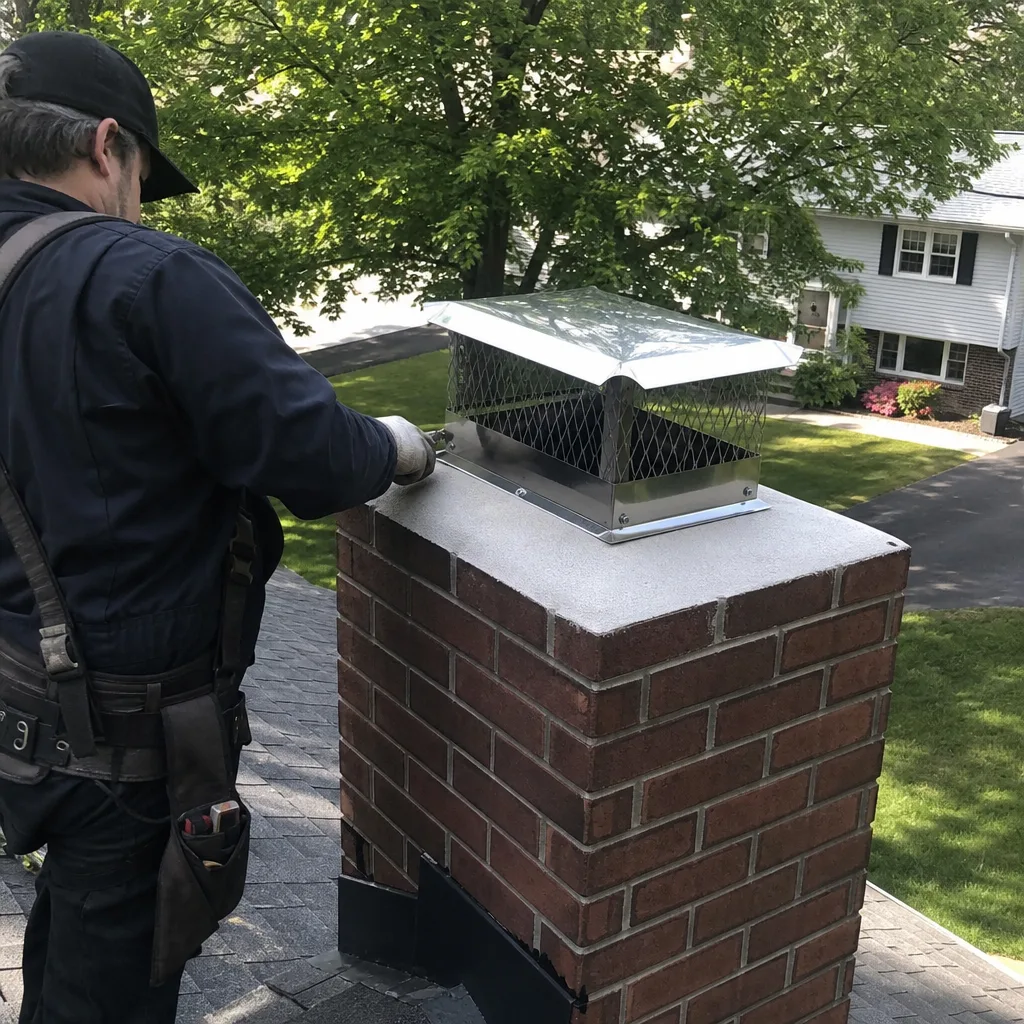 After
After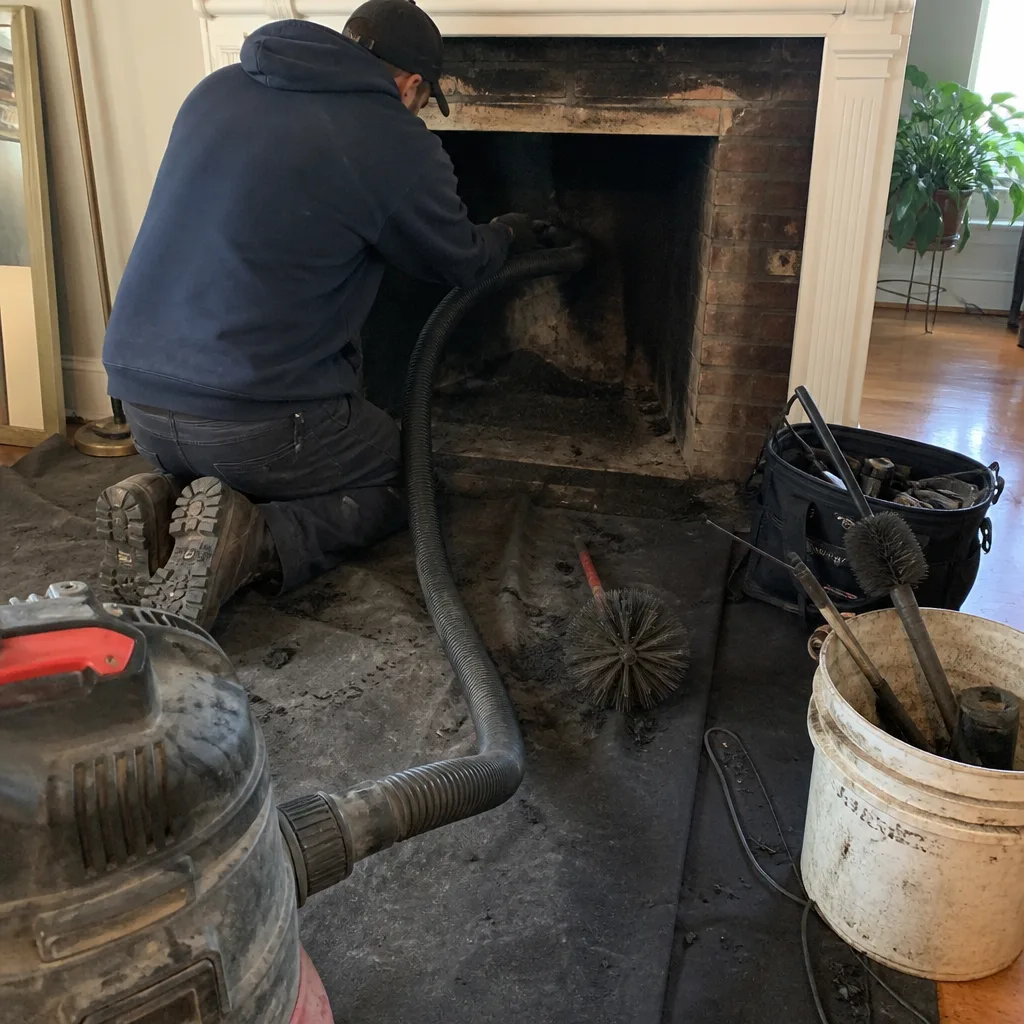 Before
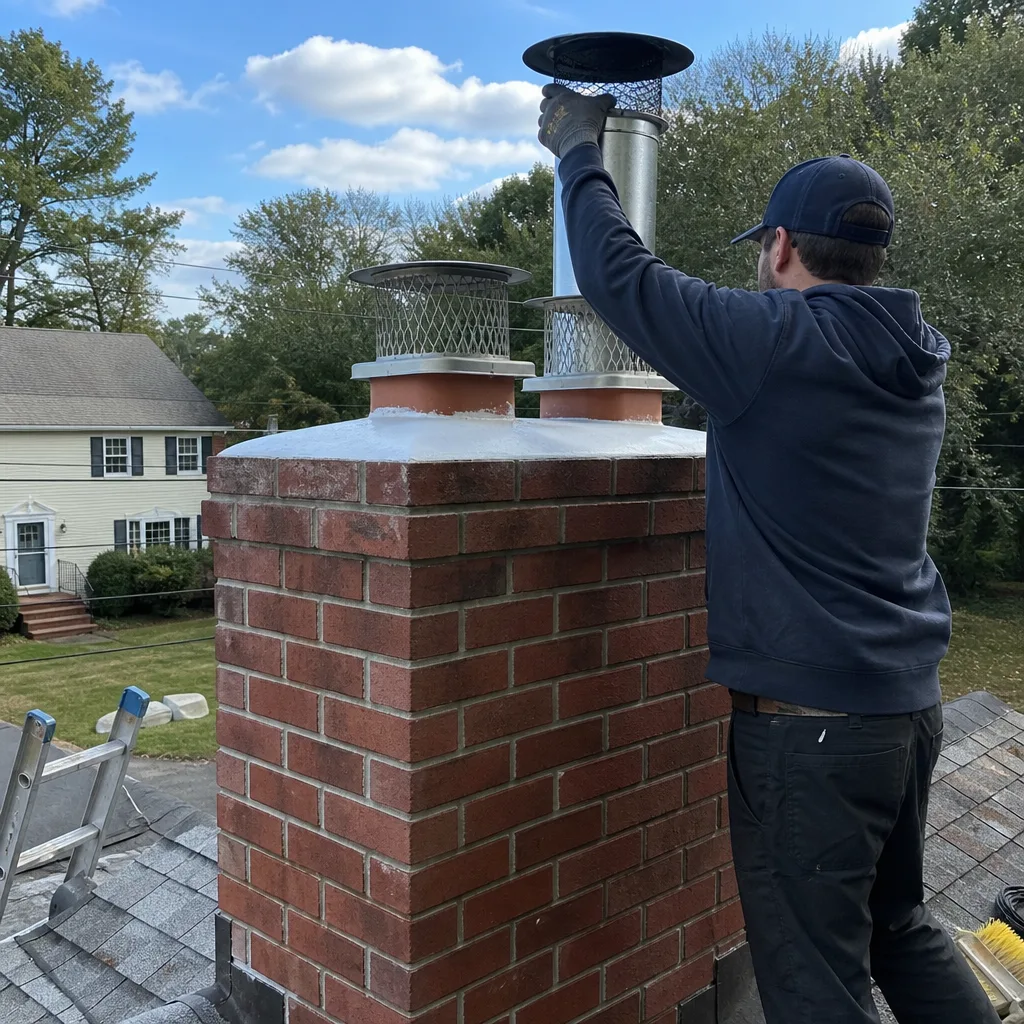 After
AfterOlympia Chimney Chimney Cap Installation: The Natick Owner’s Guide
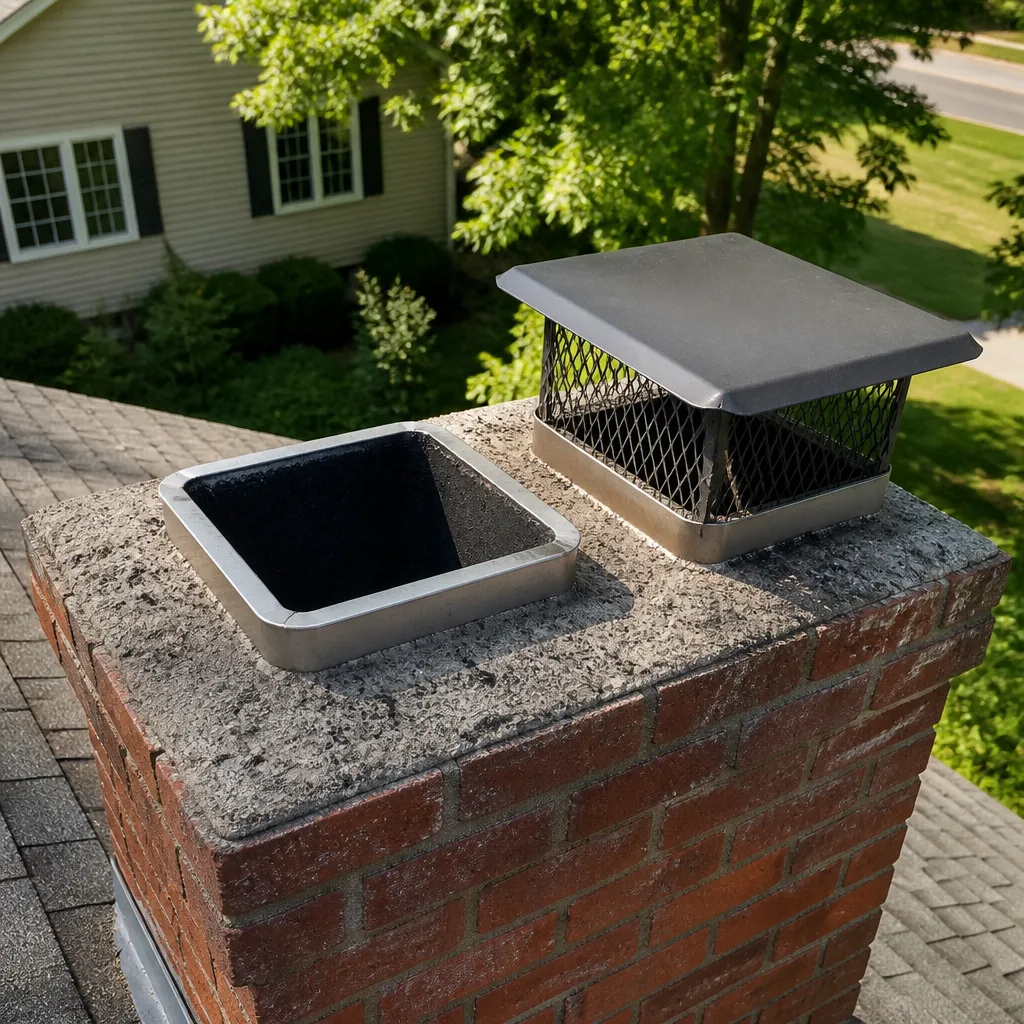
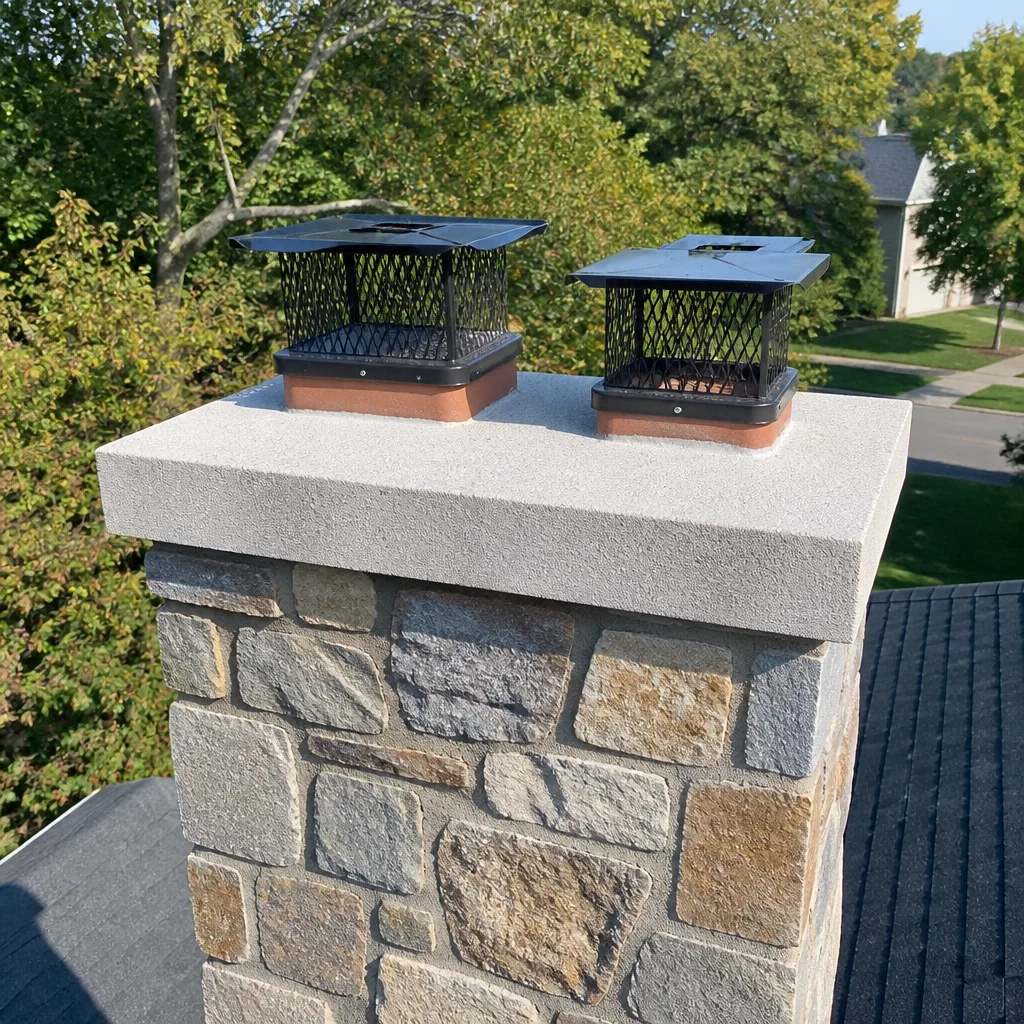
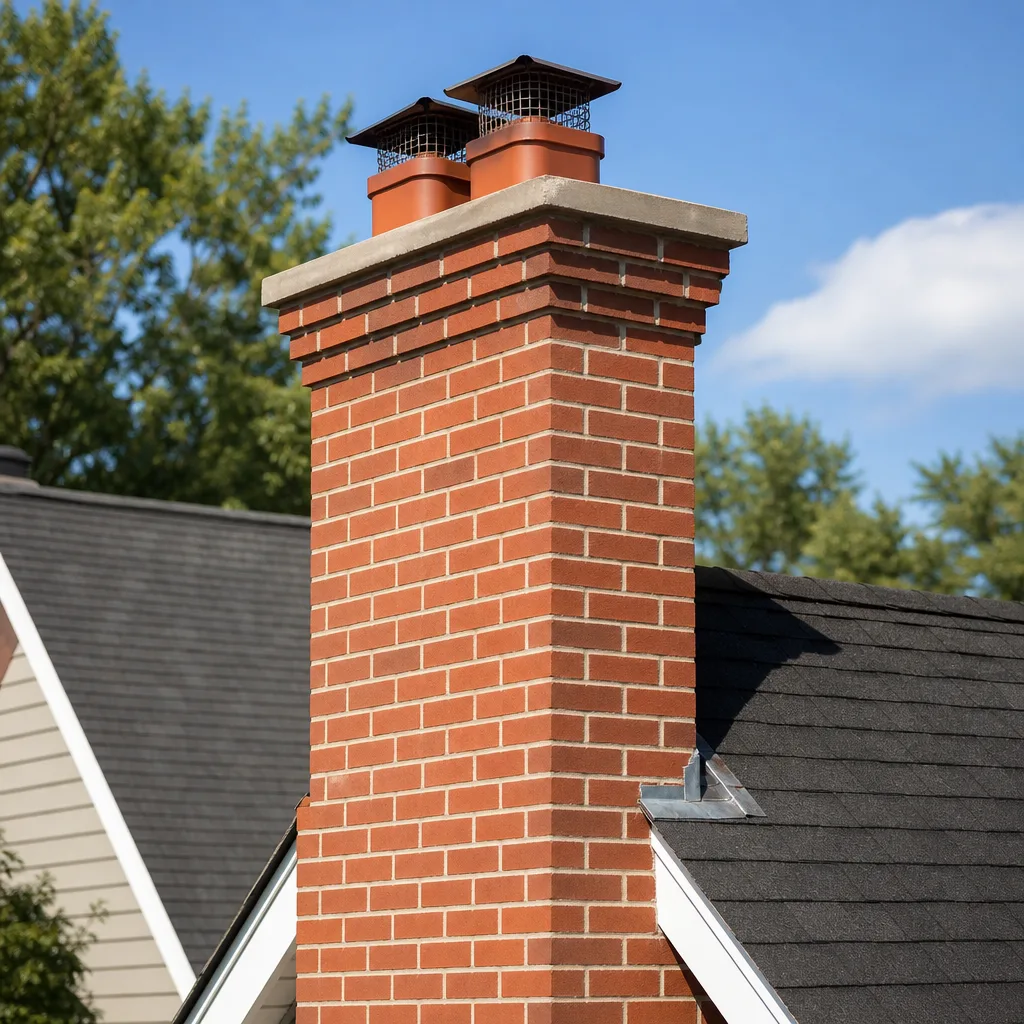
If your Olympia Chimney cap has rusted through, blown off in a nor’easter, or let a family of starlings set up housekeeping in your flue, we stock the parts and do the install. In Natick, a complete Olympia Chimney cap replacement with installation typically runs $240 to $420 depending on flue size, roof pitch, and whether the chimney crown needs spot repair before the new cap seats properly. Most Natick homes have standard 6-inch or 8-inch round flues, and we carry both sizes on the truck. The usual giveaway is that you spotted rust streaks down the cap’s sides, heard something scrabbling in the chimney, or caught the cap lying in the yard after a windstorm.
Which Olympia Chimney Models This Applies To
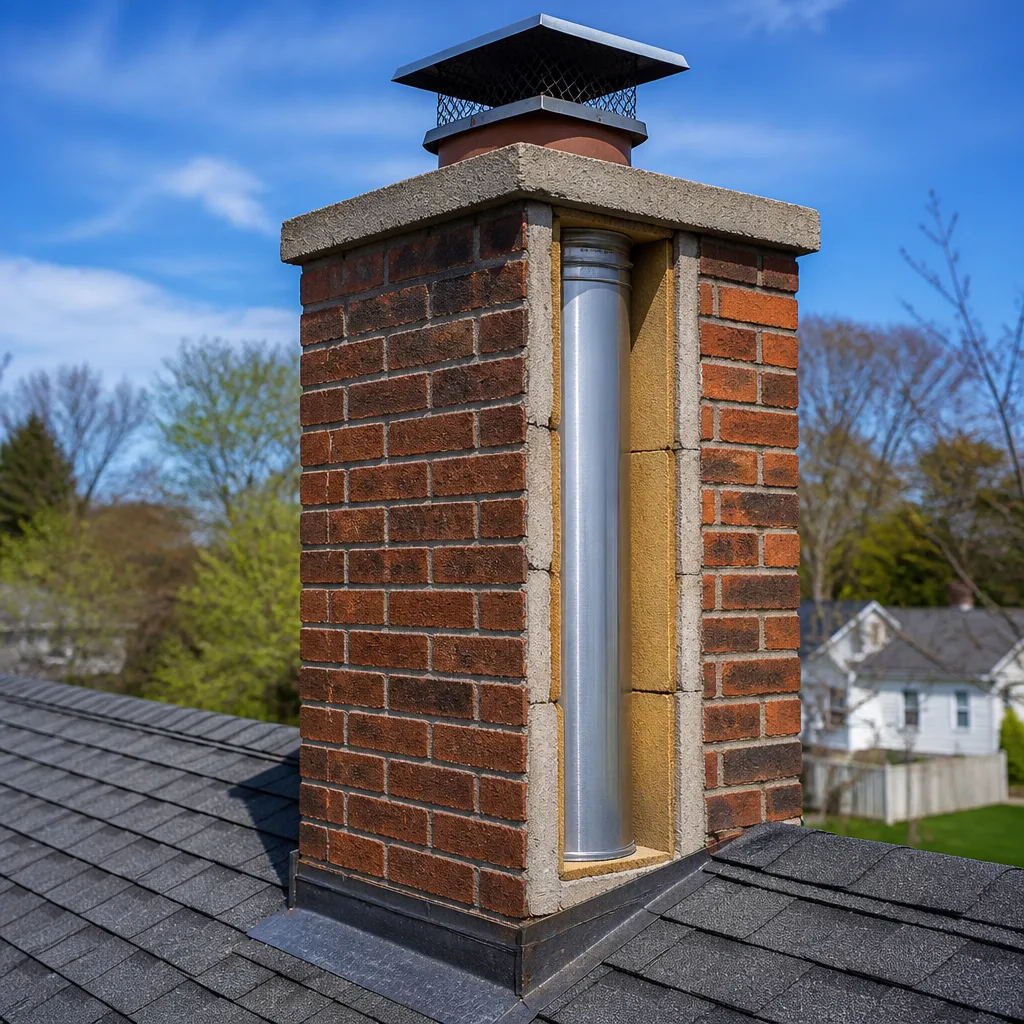
Olympia Chimney makes caps sized by flue diameter, not by a model number stamped on the side of your fireplace. The cap fits the flue tile or metal liner at the top of the chimney, so what you need to know is the inside diameter of that flue: 6-inch, 8-inch, 10-inch, or 13-inch are the common sizes, and in Natick’s older colonials and capes built between 1950 and 1980, 8-inch is the one we see most often. If you have an Olympia Chimney stainless liner already in place, the cap size matches the liner diameter, and we can confirm it with a quick measurement from the roof.
The real compatibility question is how the cap secures to the chimney. Olympia offers standard slip-in caps, which slide into a round flue tile, and those with a built-in mesh screen to keep animals out. For rectangular flues, or for chimneys with a cracked top tile that’s been cut down to accommodate a cap, the aftermarket route often works better than trying to make an OEM cap fit a chimney that’s settled or shifted over the years. That’s one of those things you can’t tell from a photo, and it’s a big part of why we would rather put eyes on the chimney before quoting a cap rather than sell you a part that doesn’t sit level and rattles in the wind.
Wendell has spent the better part of two decades driving out to Natick from the shop, and he will tell you that a chimney cap that doesn’t seat right is worse than no cap at all. It leaks, it shifts, and it gives the squirrels a ladder. Top Hat Chimney is an independent service provider and not affiliated with Olympia Chimney, but we have installed and serviced their products for years and keep the common sizes and hardware on hand.
Signs Your Olympia Chimney Chimney Cap Installation Is Failing
- Rust streaks running down the cap or the chimney crown. Most caps are stainless or galvanized, and when the galvanized coating wears through in New England’s freeze-thaw cycles, the steel underneath starts to bleed rust. Once you see that, the cap is on borrowed time. This is the most common failure we see in the older homes near Wellesley Street and down toward Route 9.
- Animal noises in the flue. If a cap’s mesh screen has rusted out or the cap has shifted, birds and squirrels get in. They nest, and a flue packed with nesting material is a carbon monoxide hazard, not just a nuisance.
- Water staining on the interior chimney wall or smoke shelf. A cap that’s no longer shedding rain properly lets water run down the flue. That moisture breaks down mortar from the inside and shortens the life of any liner, Olympia or otherwise.
- Cap leaning or visibly loose from the ground. Wind, falling limbs, and ice dam cycles can shift a cap with a few years on it. A leaning cap means the base clamp or tension hardware has let go, and the next strong storm is likely to finish the job.
- Sparks or embers escaping the flue opening after dark. If you can see sparks from the roof, the spark arrestor screen has deteriorated or the cap has failed at the screen seam. That’s a real fire hazard with wood-burning fireplaces, and it needs attention before you use the fireplace again.
Replacement Cost & What’s Included
In Natick, an Olympia Chimney chimney cap replacement with installation typically runs between $240 and $420. The biggest factors are flue diameter, chimney height and roof pitch, and whether the existing crown or top flue tile is in good enough shape to accept the new cap. On a single-story ranch with an easy walkable roof and an intact flue tile, a standard 6-inch or 8-inch cap usually comes in on the low end of that range. On a two-story center-hall colonial with a steep pitch where we need to run safety lines, you’ll be toward the higher end.
What’s included in our price: the Olympia Chimney-compatible cap, the mounting hardware and fasteners, the labor to remove the old cap, a visual check of the flue tile and crown, and the cleanup. You don’t get charged a separate line item for showing up, and we don’t add a fuel surcharge. The number we quote before we start is the number on the invoice. Every job is backed by the 90-Day Done Right Promise in writing, and since we’re the ones who installed it, if anything works loose after a big storm, one call brings the crew back at no charge. Seniors and veterans get 10% off always, and any repair over $200 currently takes $40 off.
DIY or Call Us?
This is a job I would not recommend for a ladder-and-cordless-drill Sunday project, and here’s why: you are on a roof, often wet or frosty in our shoulder seasons, reaching over your head, sometimes two stories up, holding a metal part that catches wind like a sail. If the chimney is any taller than a one-story ranch, or if the roof has any pitch to it at all, that’s a fall risk that is not worth saving a couple hundred dollars.
What you can safely do from the ground: look for the rust streaks, check whether the cap is leaning, and listen for animal noises after dark. What you should not do is get up there with a hammer and a hope. If the cap has failed, there’s usually a reason, and sometimes that reason is a cracked flue tile or a crown that has spalled apart under the cap. If you put the new cap on top of a bad foundation, you will be buying another one in a couple of years. If you’re in Natick and you want a straight read on what’s actually happening up there, call us at (781) 378-5846. We will take a real look and tell you the truth, even if the truth is that the cap can wait a season.
FAQs
In the Natick climate, a stainless chimney cap usually gives you 15 to 20 years, while a galvanized one often taps out in 8 to 12. Freeze-thaw cycles and road-salt air coming in off the Pike both eat at these parts faster than the dry southwest, where a cap might last a generation. If the cap is stainless and seated correctly on a sound flue tile, you’re in good shape for a long while. Call (781) 378-5846 for a free estimate.
Sometimes the base can be re-banded or the screen patched, but honestly, by the time rust shows, the metal is usually thin enough that repair is a short-term fix. If the cap is less than five years old and just loose, we can re-secure it. If it’s rusted through, replacing it is the cheaper move over three years. Give us a call at (781) 378-5846 and we’ll give you our honest take.
A straightforward replacement on a single flue is usually done in 60 to 90 minutes, including setup, the old cap removal, cleaning the seating surface, and getting the new cap locked down level. We carry the common sizes on the truck, so most Natick jobs don’t need a second visit. Call (781) 378-5846 for a free estimate.
We carry 6-inch, 8-inch, 10-inch, and 13-inch caps, along with screens and mounting hardware, so most installations happen in one visit. If you have an unusual flue configuration or a custom chase cover situation, we will measure and get the right part ordered, and there’s no charge for the extra trip inside Natick. Call (781) 378-5846 for a free estimate.
Written by Wendell Pike, Owner, Top Hat Chimney at Top Hat Chimney, serving Natick and nearby areas.